J. ROSARIO NARCHISON, Indian School of Asian Theology, Whitefield.
CHAI Paper. Reproduced from India’s Christian Heritage
Ed. Dr. Oberland Snaitang & Chev. Prof. George Menachery
Dharmaram, Bangalore 23
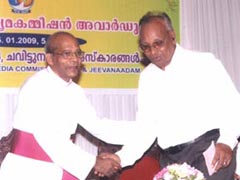
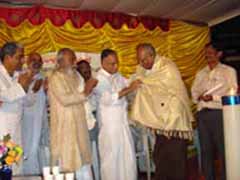
Prof. George Menachery honoured with the Athi Vishishta Gurushreshta Award
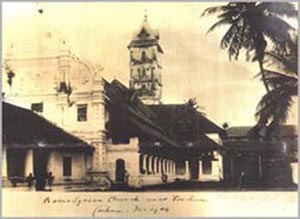
Menachery Conversations: Century-old photos speak volumes about Thomas Christian Art Architecture incl. Murals & Margamkali: Vazhikkurai Global Webinar
MARIYAM THRESIA SAINT
GEORGE MENACHERY TIMES OF INDIA
Prof. George Menachdery Autobiographical channel interview "NJAN" "I"
Prof. George Menachery biographical programme on Shalom TV
The Imitation of Christ : Prof. George Menachery TALK on Shalom TV
Role of Christians in Independence struggle of India By Prof. George Menachery
Justice Kurian Joseph on the Indian Constitution - Inaugural Speech at Prof. George Menachery ASHEETI Heritage Lecture Series at the Kerala Sahitya Academy
MENACHERY Heritage Lecture Series Concludes-The HINDU
Sessions held as part of 80th birthday fete of writer and historian George Menachery
An eight-day lecture series on the topic ‘My Kerala, My Heritage’ by historian, educationalist, journalist, and writer George Menachery, in connection with his 80th birthday celebrations, concluded here on Sunday.
Addressing the valedictory function here on Sunday, Baselios Mar Thoma II, the Catholicos of the Orthodox Syrian Church, remembered Prof. Menachery as his English Professor at St. Thomas College, Thrissur. The Catholicos recalled Prof. Menachery’s contribution to research in Indian church history and mural arts.
Presiding over the function, Anil Vallathole, Vice Chancellor of Thunchath Ezhuthachan Malayalam University, noted Prof. Menachery’s studies concentrated on less-trodden paths. A historian of Syro Malabar Church and Kerala history, Prof. Menachery is the editor of St. Thomas Christian Encyclopaedia of India and Indian Church History Classics . He is recipient of Order of Saint Gregory the Great, known as Title of Chevalier.
He retired as postgraduate professor and Head of the Department of English from St. Thomas College, Thrissur.
He has been teaching theologians as visiting professor of Sacred Art (both Indian and Western Christian Art and Architecture) at Pontifical Theology Institute, Aluva, for the past 30 years. Winner of many awards, Prof. Menachery has written many books .
The eight-day lecture sessions dealt with various aspects of Kerala history, culture, traditions, customs, murals, wooden reliefs, architecture, anthropology, and archaeology.
MENACHERY Heritage Lecture Series Inaugurated Justice Kurian Joseph on Constitution - TIMES OF INDIA
‘Constitution’s focus on secularism a uniting factor’
Thrissur: Supreme Court judge Kurian Joseph on Sunday said Indian Constitution, with its emphasis on secularism, has played a crucial role in uniting India which had inherited amazing diversities.
“Indian Constitution is an extremely inclusive and comprehensive document. It guarantees the freedom to profess, practice and propagate any religion. The fundamental rights to equality as well as to life and liberty are guaranteed by the Constitution even to those visiting India,” Justice Joseph said.
He made these observations while inaugurating an eight-day lecture series organized as part of the 80th birthday celebrations of George Menachery, who has made important contributions as an anthropologist, Indologist, as well as historian of the Syro-Malabar Church and of Kerala.
He said India welcomed all religions. This was possible because the people here could recognize the contributions those religions could make to enrich its culture. Some believe that Christians are aliens who settled here. This is not true, Christians are natives who have made important contributions in nation building, he said.
Educationist Chithran Namboodirippad, Assyrian Church metropilitan Mar Aprem, former speaker Therambil Ramakrishnan, and Thiruvambady devaswom president M Madhavankutty spoke on the occasion.
Prof. George Menachery - ASHEETI(80) - Lecture Series
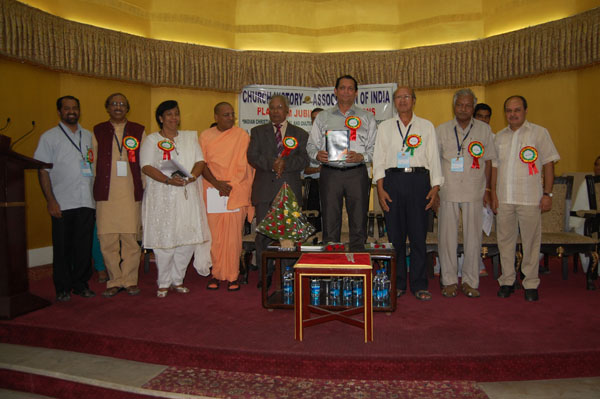
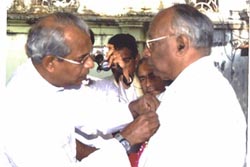
Rajya Sabha Deputy Chairman P. J. Kurien presents Prof. George Menachery at Delhi with the CHAI (Church History Association of India) Distinguished Service Award at the Millennium Hall Delhi.
Prof. George Menachery, encyclopaedist and historian turned eighty on 2nd April, 2018. A gathering of his admirers including leaders and dignitaries from the fields of politics, culture, literature, art, and religion, representing the various organisations where he has been president, director, or other office-bearer, gathered to greet him on the occasion. The gathering unanimously decided to commence the cultural luminary's Asheethi celebrations with an eight day lecture programme at the Kerala Sahitya Samithi from 27th May (Sunday) to 3rd June (Sunday). Prof. John Cyriac, Dr. Puthezhath Ramachandran, Dr. Shornur Karthikeyan, Prof. M. Muraleedharan, Prof. M. Madhavankutty, Dr. Devassy Panthallukkaran, Thomas Kollannur, Baby Mookken, Joseph John Keethra, Prof. V. A. Varghese P. M. M. Shareef, Dr. Paul Pulikkan, Prof. V. P. Jones, Davis Kannampuzha were among those who spoke on the occasion.
KERALA GOVT. AGRICULTURAL MINISTER SRI SUNUL KUMAR PRESENTS PROF. GEORGE MENACHERY WITH THE "KERALA SABHA THARAM" AWARD AT IRINJALAKUDA. DR. PAULY KANNOOKKADAN, BISHOP OF IRINJALAKUDA, BP. POZHOLIPPARAMBIL, BISHOP,OF HOSUR, ETC. ARE IN THE PICTURE.
Thrissur Pooram Memories of Prof. George Menachery Mathrubhoomi April 27, 2017
Pooram Exhibition: Christian Cultural Pavilion (Malayalam) First World Malayalam Conference Trivandrum Kanakakkunnu Exhibition-Christian Pavilion
MALANKARA Catholic Re-Union Golden Jubilee Exhibition Kottayam
Malabar Knanaya Migration Platinum Jubilee Symposium,
Madampam
President:Archbishop Mar Matthew Moolakkat. Inaugurated by
Prof. George Menachery
മടമ്പം
മേരിലാൻഡ്
ഹൈസ്കൂൾ
മുഖ്യാധ്യാപകനും
ശ്രീകണ്ഠപുരം
നഗരസഭാ
കൗൺസിലറുമായ
ഇവന്റ്
കോ-ഓർഡിനേറ്റർ
കെ.
ബിനോയ്,
കൗൺസിലർ
ഷിന്റോ
ലൂക്ക
എന്നിവരും
ചടങ്ങിനു
നേതൃത്വം
നൽകി. -
See more at: http://www.deepika.com/News_Cat2_sub.aspx?catcode=cat2&newscode=432163#sthash.iHUm4j9F.dpuf
FREE Encyclopaedia
As part of the approaching Golden Jubilee Celebrations
of the St. Thomas Christian Encyclopaedia of India (Ed. Chev.
Prof. George Menachery) it has been decided to provide all
Major Seminaries and Theological Colleges all over the world
with a copy each of the THOMAPEDIA (enlarged MIllennium
edition of Vol. II of the Encyclopaedia (PB) price US$ 90.00)
free of cost. Request may kindly be made officially to the St. Thomas Christian
Encyclopaedia of India, West Bazaar, OLLUR, Kerala, INDIA
680306. Ph.:0091-940049 4398. Enclose US$ 20 – twenty only -
for AIRMAIL delivery. There will be no charge for the Volume
itself.
The
National Executive of CHAI (BOT) which met at Delhi under
the presidentship of CHAI President Dr. Oliver A. Jetti on
the 24th of Sept. 2016 decided to conduct the 17th
CHAI Triennial at Delhi in October 2017 with the
participation of all the ecclesiastical heads of Delhi
Churches and the Civil and religious leaders from all over
India, and Church History Scholars and students of all
Indian States. An elaborate Indian Christian Historico
Cultural EXPO will be a part of the Triennial as also an
essay competition on the theme of the Triennial for college
students and seminarians nationwide. The participants
resolved to make the Delhi Triennial a memorable one even
surpassing the achievements of all earlier 21st
century Triennials at Kochi, Goa, Shillong, Hyderabad, and
Ranchi. The North India Branch will host the Triennial.
Participants at the
National Executive Committee Meeing (BOT) of the Church
History Association of India held at Delhi on the 24th
Sept. 2016 with the CHAI National President Dr. Oliver A.
jetti in front of the venue of the meet Vidya Jyothi
College. L. to R. Dr. Francis Thonippara (Treasurer), Dr.
George Oommen (Gen. Secretary), Dr. Varghese Perayil (Tiruvalla),
Prof. George Menachery, Dr. Oliver Jetti, Dr. Leo Fernando
(North India Branch President and Principal Vidya Jyothi)),
Dr. Joe Kalappura (Patna), Dr. Charles Dias (Ex. M. P. and
South India Secretary), Dr. John (Derhadoon), Dr. Manmese
EKKA ( Eastern India President) and Dr. Cyril (Ranchi).
Prof. George Menachery "The Famous Ollur Church"
(Malayalam)
‘Buon Natale’ enters Guinness World
Records
TODAY'S PAPER » NATIONAL » KERALA
THRISSUR, December 28, 2014
SPECIAL CORRESPONDENT (THE HINDU)
For the record:Thrissur Archbishop
Mar Andrews Thazhath addressing a
gathering of Santa Claus (right) on
Saturday.— Photos: HINDU
: ‘Buon Natale’, a Christmas
procession taken out here on
Saturday by the Thrissur Archdiocese
of the Syro-Malabar Church, entered
the Guinness World Records for
having the largest number of people
dressed up as Santa Claus (Father
Christmas).
18,112 people
With 18,112 people donning the
red-and-white costumes, the
procession was declared at 4.35 p.m.
“the largest gathering of Santa
Claus” by authorities of the
Guinness World Records.
Pontifical Lateran University Major
Rector Archbishop Enrico dal Covolo
witnessed the procession.
Elaborate arrangements
Elaborate arrangements were made for
counting the participants.
Manorama Photo
M.P. Vincent, MLA, Thrissur Mayor
Rajan Pallan, District Collector
M.S. Jaya, Thrissur Archbishop Mar
Andrews Thazhath, Auxiliary Bishop
Raphael Thattil, KPCC general
secretary Padmaja Venugopal, and
Cochin Devaswom Board president M.P.
Bhaskaran Nair were present.
Dear scholars,
May I invite your attention to the
attachment where details of the
International Conference proposed to
be held from 23-25 Feb. 2014 on
megalithic burial sites of south
India wsrt Kerala and possible
Jewish Connection of these sites
followed by a tour of megalithic
monuments on the 26th are given. You
are invited to participate. If you
have suggestions for papers pl.
share it with me.
-Prof. George Menachery, Chairman
Organising Committee.
COURTSEY THE
HINDU
Fr. Kuriakose Elias Chavara and Sr.
Euphrasia Eluvanthinkal
Pope
Francis on Sunday declared Fr.
Kuriakose Elias Chavara and Sister
Euphrasia Eluventhinkal from India
as Saints at Vatican.
With their Canonisation, as the
finale of the long-drawn process is
known in Catholic parlance, the
centuries old Syro Malabar Catholic
Church has three Saints, the first
being Sister Alphonsa raised to the
revered rank in 2008.
The two from Kerala were declared as
Saints during a special mass at St
Peter’s Square at Vatican, Syro
Malabar Catholic Church sources said
here.
According to church scholars, Syro
Malabar Church, which traces its
origin to the visit of Apostle St.
Thomas to the Kerala coast in the
first century AD, is one of the 22
Eastern Churches in Full Communion
with Rome.
The Pope declared Chavara and
Euphrasia as Saints during a special
mass at St Peter’s Square at
Vatican, a moment shared in elation
and spiritual fervour by churches
across Kerala where the faithful
throng in large numbers for thanks
giving service and prayers.
A large number of devotees, two
Cardinals, bishops and clergy and
nuns from Kerala attended the
ceremony at Vatican also.
Three places closely associated to
the lives of Chavara and Euprhasia
at Mannman in Kottayam, Koonammavu
in Ernakulam and Ollur in Thrissur
have already been in a jubilant mood
for the last several days.
Founder of the congregation
Carmalites of Mary Immaculate (CMI),
F. Kuriakose Elias Chavara
(1805-1871) was more than a
spiritual leader of Syro Malabar
Catholic community.
Historians and church chroniclers
consider him as a social reformer
who gave thrust to secular education
of not only Catholics but also of
children other communities,
especially the depressed classes.
Incidentally, one of the first
institutions he founded was a
Sanskrit school.
As the Prior General of the
congregation, Chavara also took
initiative for setting up a printing
press and encouraged the community
leaders to launch its own
publications.
The CMI has over the decades set up
a large number of educational and
charity organisations within and
outside Kerala, drawing inspiration
from the work and vision of its
founder.
He was born in a family of modest
means at Kainakari village in
Kuttanad in Alappuzha district on
February 10, 1805. He entered the
seminary for training as a priest at
a young age. After his ordination in
1829, he took the initiative to form
the CMI in 1831, the first
congregation for men in the Syro
Malabar Church.
The Canonisation procedures in his
case began long back and was
declared a Venerable in 1984 and was
beatified by Pope John Paul II,
during his visit to Kerala in 1986.
Sister Euprhasia was a spiritual
person who chose to live in the
confines of a convent in Thrissur
helping the people who came seeking
her support
“Evuprasiamma”, as she is known to
the members of the local community
around her convent in Ollur, brought
spiritual solace to the people who
approached her through prayers and
wise counsel.
Sister Euphrasia, who was born on
October 17, 1877 at Arnattukara in
Thrissur and died in 1952, was
significantly a member of the
Congregation of Mother of Carmel
(CMC), founded by Chavara for women.
She was declared Servant of God in
1987 and beatified in 2006 after the
approval of a miracle attributed
through her intercession by the
Vatican panel set up to consider her
case for Sainthood.
Euphrasia
was living saint for the faithful
Sister Athanasia studied at St.
Mary’s Convent School, Ollur. “I
used to watch Sister Euphrasia
praying with a rosary in her hand in
the chapel. Whenever we faced some
problems either in school or at
home, we used to ask Sister
Euphrasia to pray for us. She was a
living saint,” says Sister Athanasia.
Later when she became a nun, Sister
Athanasia had opportunity to spend
time with Sister Euphrasia in the
convent. Sister Cleopatra, Mother of
St. Mary’s Convent, was another nun
who had an opportunity to be with
Sister Euphrasia. She initiated the
procedures for the canonisation of
Sister Euphrasia. She will be in the
group going to Rome to witness the
canonisation ceremonies.
Sister Euphrasia’s family has
another Euphrasia — granddaughter of
her brother. She was named after
Sister Euphrasia when her mother
developed complications during her
delivery. The family believes that
the blessings of Sister Euphrasia
helped overcome the crisis. Sister
Euphrasia herself named the child
Euphrasia.
Devotees are
thronging the tomb of Sister
Euphrasia at St. Mary’s Convent,
Ollur.
Since the Vatican
announced the date of canonisation
of Mother Euphrasia on November 23,
special prayers are being held
regularly at the chapel.
The chapel that
housed the tomb was a popular
pilgrim centre much before Sister
Euphrasia was named Servant of God
by the Church, Sister Cleopatra,
Mother of the St. Mary’s Convent
said.
She was considered a
saint by her fellow nuns and the
people of Ollur long before the
Church took the decision to canonise
her. She spent her entire life in
prayers and was an epitome of
sacrifice. Many miracles have been
attributed to Sister Euphrasia even
when she was alive, said Sr.
Cleopatra.
She said she was
lucky to be with Sister Euphrasia at
St. Mary’s Convent. Sister Cleopatra
took the initiative for the
procedures of canonisation as
provincial at the convent.
“I have been visiting
the chapel every week for the last
one year,” said Rosy Francis of
Thrissur. Life of Sister Euphrasia
is a role model for each devotee,
she said. More than 600 people are
going to Rome from the district to
take part in the canonisation
ceremonies. Meanwhile, a torchlight
procession will be taken out by the
State Committee of the Christian
Life Community on November 23. It
would start from Kattur, Sister
Euphrasia’s hometown and conclude at
St. Mary’s Church, where she served
for many years. –THE HINDU
It took more than 28
years to complete the canonisation
procedures of Sister Euphrasia.
The procedures for
the nomination of Sister Euphrasia
for the sainthood were started in
1986 when Mar Joseph Kundukulam was
Bishop of Thrissur.
She was declared
Servant of God in 2002 and Blessed
in 2006. The Vatican has recognised
many miracles that have happened
through Sister Euphrasia’s
intercession.
Satsang
Satsang, a Thrissur-based
socio-cultural group, has organised
a story telling programme on life of
Sister Euphrasia. Hundreds of school
students attended the story telling
sessionOru
Muthumaniyude Kadhaorganised at
St. Mary’s Convent on Wednesday.
Self denial makes a
person a saint, said Mon. Francis
Alappat, patron of the Satsang.
Great people like Mahatma Gandhi,
Sree Buddha and Sister Euphrasia
practiced self denial. Human values
are much greater than money, he
said.
ISBN 81-87133-10-4
Mega Malayalam Book by
Prof. George Menachery
Price Rs. 1200/- Pre publication price till March Rs. 800/- Send money to
SARAS,[ South Asia Research Assistance Services],
OLLUR 680306 Kerala India
pallikkalakal@gmail.comwww.indianchristianity.com
Mega Malayalam Book on the art, architecture and cultural heritage of the Thomas Christians. Full book printed on art paper in full colour. One thousand full colour photographs, sketches, plans, maps, epigraphic reproductions on Nazraney heritage. Published on Easter Day, 2014. Price Rs. 1200/- Pre-pub price until March 800/- only.
Book your copy by remitting the amount to SARAS, Ollur, 680306.
Or transfer amount to A/c SARAS , South Indian Bank, Holy Angel’s Road Branch, Ollur, 680306. A/c Name : SARAS A/c No. 0533073000000008
IFSC Code SIBL 0000533 SWIFT Code SOININ55
Wednesday Morning
More black smoke poured from the
chimney on the roof of the Sistine
Chapel at 11:40 a.m. March 13,
though it is “no smoking day”,
indicating that the 115 cardinal
electors failed to elect a pope on
their second and third ballots.
The cardinals had voted once
yesterday March 12 without electing
a pope. According to the schedule
published before the conclave, the
cardinals were to take two votes in
the morning of their first full day
in the Sistine Chapel and return to
their residence at 1 p.m. for lunch
if the voting was unsuccessful. Now
they will be back in the Cappella in
the afternoon for two more votes
today.
Romans, pilgrims, and tourists began
arriving in St Peter's Square early
today morning in spite of the
almost torrential rains, hoping to
get a glimpse of history by watching
for white smoke from the chapel
chimney. "It's an incredible moment,
but we want the rain to go away,"
said one chimney watcher.
And in the afternoon white smoke
came out. He who entered the
Conclave as Cardinal has come out in
the white cassock. Except for the
much expected election of Cardinal
Ratzinger always a dark horse had
won. And South America with more
than a third of the world Catholic
population surely deserved it and as
I earlier remarked it was a football
match between Brazil and Argentina
and Argentina won. If any place
needs a counter-reformation, even
more than Africa, it was South
America, and the Cardinals have
chosen well. And now the South
American dictators have reason to
shiver in their shoes, as JPII's
election made Eastern Europe tremble
and burst. By choosing the name
Francesco he has shot down two birds
at one shot: Francis of Assisi is
the beloved of Italy and the new
Pope's mode of operation resembles
the saint's. And the veneration for
the Jesuit missionary Francis Xavier
could be hidden in the choice, and
some regard for India and the East
too.
The evening was even colder than
Tuesday and the rains were almost
incessant. But an even greater crowd
waited patiently for the smoke,
black or if luck could have it,
white. The slogan shouting and
occasional prayers gave some relief.
But the real relief was the bird
which came and perched for such a
long time on the cap of the
smoke-stack. Probably it was a
little warm as the tube was
connected to the stoves below in the
Sistine Chapel. Anyway the Albatross
like vision of the bird gave the
rain hoisting crowd something to
rest their eyes on. An old fashioned
journalist like me thought of the
bird as the Holy Ghost whispering
the necessary inspiration to the
befuddled Cardinals through the thin
pipe, and so I was sure it would be
white smoke this time. And wnen a
small, infinitesimally small, row of
lights was switched on some fifteen
minutes before the smoke show I was
certain the Cardinals had come to a
decision. Soon, not so soon,
followed the Habemus Papam which was
followed by the Pope’s appearance on
the central balcony which was now
adorned with the papal maroon?
tapesties.
Black Smokefor
the first time in 2013
After a short siesta I started back
to the Piezza San Petro by about 4 p
m. When I reached the Square the
huge screens installed there were
showing the oathtaking of the
Cardinals in the Sistine after their
colourful procession to the Sistine
form the Pauline chapel, gliding two
by two along the Scala Regia.
Although Cardinal Alencherry is
third in the lists of Electors he
was seen taking the oath as 87thor
88thand
Cardinal Thottunkal followed after
three or four other Cardinals in the
oath taking. The
Vatican spokesan, Federico
Lombardi, who was present for the
swearing in said with a smile “They
were all there. We counted”.
Soon after thatthe
papal master of ceremonies, Msgr.
Guido Marini, pronounced the words
“extra omnes” that is “Everyone
Out”. A large number of attendants,
clergymen, and Vatican officials
were seen trooping out of the huge
wooden door. Then he closed the
doors with a loud click and locked.
The Con – Clave had begun. Theywrote
the name of their candidate on
rectangular pieces of paper and
tipped them into a
flying-saucer-shaped urn, to be
counted by hand and recorded by
three cardinals chosen by lot
Then the waiting of the crowd began.
The day was long, rainy, and very
cold. But the crowd only increased
as time went on. As it grew dark and
the Sistine smoke stack became
invisible the giant screens captured
it for all to see. But for the
flying of birds near the chimney
which was seen on the screen there
was little else going. The the
lights on the Basilica and the
Palace came on step by step. Finally
it was a wonderful sight. By seven
of the clock the Square must have
contained thousands upn thousands of
pilgrims, tourists, and tradition
loving Romans. At 7.41 the tube
began to spew black smoke, not like
the wisps of smoke in past
conclaves, but huge billows of
really black smoke thanks to the
second electronic stove this time
and the chemicals used for black
smoke: The Vatican now uses a
mixture of potassium perchlorate,
anthracene and sulphur to produce
black smoke and potassium chlorate,
lactose and rosin for white, the
Vatican says on its website. I still
remember the straw and coal pieces
or pitch I took and put in my coat
pocket as souvenirs from near the
single stove in 1978 when a few of
us were allowed to see Area Conclava.
The new arrangements makes it
certain that black smoke is black
and white smoke white, and you need
not listen to the huge Vatican bell
Kanchenone or other Roman church
bells to make sure a new Pope has
been elected.
As the whole periphery of the
Bernini colonnade was barricaded the
crowd found it difficult to go out
of the Square, and many old priests
and elderly nuns even were found
jumping the barricades, with
unfortunate results sometimes. Hope
a few openings will be left in the
coming days.
The Mass for the Election of the
Pope
Missa Pro Eligendo Romano Pontifice
(Mass for the Election of a Roman
Pontiff)
So Tuesday has dawned the 12th of
March, the day the Conclave starts.
But before the Cardinals enter the
Conclave, today early in the morning
at 7 am, they go to occupy their
room for the Conclave duration in
St. Martha's House ( many reporters
call it a hotel, of course it has
3-star amenities in 100 odd suites
and more than a dozen single rooms,
but it was ordered by John Paul II
as a residence for those coming with
official appointments with the Pope
and for Cardinals during the
election, esp. because of the
cramped accommodation in the Sistine
area, experienced by John Paul
himself as Cardinal during the two
elections of 1978) which each has
drawn in Saturday's lot. From there
they proceeded to the Basilica at
around 9.30 for the mass for the
election of the Pope. I have just
rushed out of the Basilica after
Cardinal Sodano’s sermon during the
mass. The ceremonies began at around
9.30 with the rosary followed by
various prayers and ceremonies given
in the special liturgical palmphlet
distributed to all as is the custom.
Last time in 1978 I could not attend
all these pre-mass prayers and
ceremonies because as one of the
fourteen journalists out of 1300
allowed to photograph the event I
was still waiting outside the
Basilica side entrance for Cardinal
Parecattil to arrive for the mass
whom I wanted to photograph, and he
was the very last to come. So I
entered the Basilica only after the
preliminary ceremonies. But this
time I took my seats provided for
the press up front in the Basilica
just behind the 115 princes of the
Church - in 1978 only we 14 were
given such seats, if I remember
right early enough so that I could
witness and enjoy all the pomp and
glory of the opening of the Solemn
Mass, this time by Cardinal Sodano –
a non electorunlike the last time in
2005 when Cardinal Ratzinger an
elector himself said the Mass and
gave the sermon – and the sermon
also by Sodana. But entering the
Basilica late last time I was
fortunate catch the latecoming
Cardinal Woijtiw on my Minolta
which was the last picture of John
Paul II as Cardinal and one of his
rarest preconclave photos (see
The beautiful procession of the
cardinals to the altar (which
already had its six lighted
candles), following the sleeba cross
flanked by two candles and all the
red of the cardinals and the huge
crowd of Archbishops, Bishops,
Monsignori, Priests, nuns, lay men
and colourfully dressed women was a
sight to see. I especially noticed
with delight a large number of
Indian Cardinals kissing the Bible
(I think) one by one before the
Mass. Especially Cardinal Alenchery
who is always No. 3 of the electors
by virtue of his alphabetical
primacy, and Cardinal Thottunkal (
the second Thottungal to be Bishop I
think after Clemens) though at the
end of the lists as T is towards the
end prominent in all assemblies
because of his head dress and
because he is the youngest Cardinal
Elector. As I am typing from a
portal in the media center after
rushing out of the Basilica on a
typewriter with Italian keyboard and
typing in a hurry there will be many
mistakes. Hope to send a better
message from my room later.Bye for
now. (I just discovered the
apostrophe and now I shall change
all the commas used instead till
now). (The American journalist next
to me was telling me that she
thought that there was no apostrophe
for the Italians. OK)
The Cardinals go to Martha's at
around 12 and return to the Pauline
chapel to begin the precession into
the Sistine for prayers, meditation
by the Maltese non-elector Cardinal
Prosper GRECH and for the oath of
secrecy followed by the first vote
of the conclave this very evening.
At around 5 pm the first smoke will
come out, probably black. In any
case I want to see that and before
that let me take a bite of something
from the menu which has a lot of
things I can't understand at the
Media Canteen.
Possible Popes
I do not want to pick any for the
future papacy. First of all almost
all prophecies in the past have
proven wrong. In most cases, except
perhaps in the case of Cardinal
Ratzinger, the Italian proverb has
proved right: He who enters the
Conclave Pope comes out Cardinal. We
saw this happening again and again,
the last time in 1978 Cardinal Siri
was believed sure to be elected Pope
and also Cardinal Benelli but the
pundits were proved wrong by the
reality. This time around, as often
in the past, the Cardinal electors
are supposed to be looking for
"personal holiness and a keen mind
combined with a global vision, a
capacity to evangelize, and the
ability to govern “ in the would be
pope.
And yet it would be unnatural for a
Vatican – Watcher to keep mum about
the matter. And hence here we go:
The pundits and the punters have
given us many names. Some of the
names suggested have ceased to have
buyers any more. A few new names
have taken the place of some of the
old papabili. The following is only
some musings on the topic, based on
watching the Vatican for well nigh
35 years and having researched the
ways of the Church for four decades,
but let me say it again this is
mostly only a media game to keep the
suspense alive, because the final
winner might well be a dark horse.
One of the very first who rose into
first place as the papal contender
both according to the media and the
punters was
Cardinal Peter
Kodwo Appiah Turkson, of
Ghana. The exhortations for an
African Pope in modern times found
Turkson the fittest papabile. But
two things have slightly marred his
prospects. One: a speech he made
depicting muslims not in the best of
colours. Two: His remark on the day
after benedict’s resignation
announcement in which he said he is
ready to be pope if God so wished.
This type of self projection has
been looked down upon by cardinals
for a long time and I pointed out
this on the same day. In fact
Cardinal Siriri’s bright prospects
were dimmed because he gave a press
conference the day before a previous
Conclave.
From the English
speaking world and the Commonwealth
countries there are half a dozen
papabili: From North America we have
Cardinals Timothy Dolan of New York,
Sean O’Malley of Boston and Donald
Wuerl of Washington from the USA and
Cardinal Marc Ouellet from Canada.
However the front runners as of
today are Cardinal Angelo Scola of
Milan – previously of Venice- of
Italy and Cardinal Odilo Scherer of
Brazil. Others perceived as having a
chance are Cardinal Peter Erdo of
Hungary, Cardinal Sandri (now
heading the Oriental Congregation)
from Argentina, and Cardinal Tagle
of Philippines. Cardinals from Sri
Lanka, Austria are also among those
tipped. As i have mentioned on my
site and elsewhere India’s Oswald
Gracias might be discerned as the
most suitable, perhaps.Each
Journalist I question give a
different name depending upon his
own perceptions, wish list, and
nationality.
Whatever might be the prophecies as
things stand only the third or
fourth day of the Conclave can give
us a definite answer.
SUNDAY MORNING
As I was saying, when I went into
the Sistine Chapel on Saturday I had
wanted to compare the arrangements
in the Cappella now with that of 35
years back when John Paul Second was
elected. Indeed the situation was
entirely different. First of all now
the transferring of the Chapel and
adjoining halls was only at the
initial stages. In 1978 I visited
the Area Conclave when all the
changes were already in place.
Because the Cardinals were staying
this time in the St. Martha’s House
(Domus Sanctae Marthae), a modern 3
star quality residence building near
St. Peter’s completed by John Paul
II in 1996 to avoid the
inconveniences and hardships of the
Cardinals, all forced to stay during
previous Conclaves in the little
makeshift cubicles in the halls
adjoining the Chapel, the only place
this time to visit was the Chapel
itself. Last time our tour took a
long time as we scrutinised the
beds, the dining arrangements, the
sanitary sections for the electors.
Then I remember to have pointed out
to some of the leading world
pressmen that every table in the
dining area had containers with
India’s own pepper. Since the tour
this time was quite short, though I
was able tospend an hour in the
Chapel area, more Journalists were
allowed to visit this time. Somehow
the sense of wonder that was with
all the media men allowed to visit
was lacking this time, perhaps
because all the secrets of the
secret Conclave were coming out in
the media every day and at length
and with lots of graphics and
videos.
Sunday was a day of rest, with even
the energetic Fr. Francisco Lombardy
s.j. deciding not to give one of his
lengthy briefings. The Cardinals
were free to visit their titular
churches in Rome and to say the Mass
and pray. Most of them did so while
I went to the papal summer resort
where I had an appointment with an
ecclesiastic acquaintance in Castel
Gandolfo which I had visited last
Sunday also. The Alba lakeshore is a
magnet that no one who has gone
there once could resist, with its
cycles, cats, birds, calm, chill,
and Shanthi, and of course the
rustic Tratorias and Pizzerias.
The Sistine Chimney and the Two
Stoves Installed
Early in the morning of Saturday 9th
March, 2013 when I was heading
towards the Media Centre of the
Vatican Press Office (catering to
the 4000 odd Temporarily accredited
media persons) for perhaps the final
briefing session before the Conclave
by Frederico Lombardi and his
efficient team, situated between the
first left columns of Bernini, I
looked up once again to see whether
the chimney has been erected on top
of the Sistine Chapel to snake out
black and white smoke to indicate
non-election or election of a new
Pope as the case may be. Yesterday
even late in the evening it was not
there. In 1978 I went up to the top
of the Chapel when the thin pipe had
just been installed and in spite of
the policemen guarding the pipe was
able to just touch the historic tube
to the furious reaction of the arm
of the law which I have described in
my
“Vatican Adventure and Roman
Holiday”.
Click here for the whole story:
www.indianchristianity.com/html/menachery/html/GeorgeMenachery.htm
But now I found the Vatican
firefighters , I could count at
least three of them, hard at work to
install the world attention grabbing
Chimney. I took a few photographs
and was pleased to find Reuters’
photographers just in front of me
trying different angles to get the
best pic. In case my own pictures
turn out not so good I could
always steal theirs after one or two
days, or was it ethical to do so. I
checked to see whether my name was
there among the first lot of
Journalista selected to visit the
Conclave Area, but did not find it
in the list. But soon Father
Lombardi announced that those who
still wanted to make that visit
could go to the right fountain in
front of the Basilica (that is
Bernini’s fountain for you) where
arrangements would be made to take
the Media personnel to the Sistine,
though the Sistine was closed to
visitors as of Tuesday noon.
I straight away gathered my things
together and was about to get up and
don my overcoat (today, unlike
yesterday, there were no rains) when
an Italian Journalist and her
Cameraman asked me for my Portal
seat if I were leaving. I gladly
gave them my seat and went like an
arrow to Bernini’s fountain.
Actually the media briefings were
getting a little boring as there was
mighty little to announce because
the media made everything known much
before the briefing. Visiting the
Chapel being prepared for the
Cardinal Electors was much higher up
on my agenda. Actually I wanted to
compare the present arrangements
with the 1978 Conclave Area
arrangements which were allowed to
be visited by a team of only 60
journalists (out of 1300) which
number fortunately had included the
present writer also.
At the fountain I
met a young person with the
Accreditation Card hanging from his
neck. So I asked him “Is this the
rendezvous”, and he said yes. He
was from Chicago and his name was
John Paul. I said “Oh!”. He
explained that when John Paul II had
come to Chicago in 1980 his parents
were in the audience. His mother was
expecting then. She made a vow then
if the child was a boy they would
call him John Paul. And he was the
outcome. At that time the gentle
Bruno from Sala Stampa appeared from
behind and said, “So, Prof.
Menachery, you want to come with us
to the Chapel”. It seems he had
arranged a special tour for some
vvips I understood. I said I would
love to. And we proceeded to the
Sistine, climbing the scores of
steps of the Stairs of the Kings. I
do not remember whether in 1978 we
had taken the same steps. But then
at forty climbing those steps did
not make much of an impression, but
now at 75 it really felt like
climbing the Everest. We saw the
many workmen transferring the Chapel
to suit the needs of the election. Restorers,
electricians, mechanics, carpenters,
seamstresses, assemblers, electronic
technicians and other labourers from
various areas of competence suddenly
have replaced the hundreds of
tourists who visit the Sistine
Chapel every day (20,000 tourists
per day in summer to be exact). I
took some photos of the levelling of
the floor – for three reasons: to
provide a level surface for the
chairs (115 cherry wood chairs) of
the electors, for them to walk to
the altar to vote and to work.
Secondly to conceal the electronic
devices to prevent the use of
mobiles and hidden cameras, and also
to protect the wonderful floor of
the Sistine. I also photographed the
two stoves. This time there are two:
one for burning the ballots of the
cardinals – for this the old stove
cast in 1938 (I remember this
because I was born in that year)
used for the election of five popes
already is used, which has the
popes’ names etched on it as I had
noticed in 1978. Now it has the
names of
Pius XII elected in 1939 to that
of Benedict XVI (2005). The modern
one, equipped with an electronic
device, will add the chemicals to
produce the black or white smoke
indicating the result of the voting
until the election occurs.
The second stove has a key, a red
start button and seven tiny
temperature indicator lights. Flares
will be electronically ignited
inside it to send out either white
or black smoke. I finally had one
more look at the great Last
Judgement of Michelangelo under
which the cardinals will stand to
put their ballots into the paten and
then slide it into the chalice.
Cardinal Oswald Gracias for Pope
I propose Cardinal Oswald Gracias
for Pope. Two weeks back I would not
have made such a, perhaps.
surprising statement. Then I was
thinking that one of the media’s
proposed papabili or a punters’
choice would be and should be
elected Pope without much ado. But
having arrived in Rome on the 25th
of February and having watched with
concern almost bordering on
consternation the chaos and
confusion caused also by the media
revelations each and every day and
the Cardinals’ own responses and
reactions in public and in private I
have been forced to suggest an
entirely new name for the meditation
of the electors.. My experiences in
Rome during papal elections and
other occasions and my four decades
long research into and study of the
Church emboldens me to make this
suggestion. Cardinal Gracias who
considers himself a Goan Catholic,
comes from “non-aligned” and
generally independent thinking
India, a Commonwealth country, a
leader of the third world, and a
country which still provides a large
number of religious and priestly
vocations, with an almost
self-dependent Church, and active in
all mission fields globally.
Cardinal Gracias is known to be
impartial, highly knowledgable, an
excellent leader, heading with
demonstrated skill in holding
together a Catholic community
divided by heterogenous groups of
rites, castes, tribes, languages,
and regions in a country whose
population is as large as the world
Catholic population. He heads one of
the largest Archdioceses in the
world, is the head of the Catholic
Bishops’ Conference of India, and
was elected FABC Secretary General.
His good record in the fields of
ecumenism and dialogue has been much
appreciated. Of course I am
carrying coal to Newcastle as the
Cardinals surely know their man. He
is a man for all seasons and the man
for our own turbulent and uncertain
times.
--Chev. Prof. George Menachery,
Chief Editor: Christian
Encyclopaedia of India, a
temporarily accredited journalist in
the Vatican.
Conclave must not be Pre-poned -
Prof. Menachery
If, as is reported, the election
process and the Conclave is preponed
and the Conclave meets before the
end of the stipulated fifteen days
after the Chair becomes vacant it
will be a great injustice done to
the office of the Pope. Because many
of the cardinals -ninety in fact -
were named by Benedict XVI in five
consistories dated March 24 2006
(15), November 24 2007 (23),
November 2010 (24), February 18 2012
(22), and November 24 2012 (6) all
of them in the past
less than seven years. Many became
cardinals only in the near past, 52
have been cardinals only for less
than three years. The nine days of
the novendials used to provide the
cardinals the only opportunity to
know each other, to assess each
other, and to elect the most
suitable as Pope. If the cardinals
come for the retirement audience of
Pope Benedict XVI and start the
Conclave soon after, most will lack
the opportunity to know the possible
candidates intimately, and the
election will be only a farce. The
election of the Pope must be deemed
an important matter at least by the
cardinals and they must set apart
sufficient time to proceed without
haste and estimate each candidate
impartially and in one's own light,
notwithstanding the help and
guidance of the Holy Ghost. I would
like this matter be brought to the
attention of each voter before a
decision is taken on this important
matter. And another thing: These
rules for the election of the
Supreme Pontiff were promulgated by
Popes down the centuries, with Pope
Paul VI making some amendments in
1967, 1970, and 1975; Pope John Paul
II in 1996; and Pope Benedict in his
Motu Proprio of June 11, 2007. It
may not look appropriate for Pope
Benedict XVI to script an Apostolic
Letter on this important matter
after he has declared the date of
his abdication and in a sense at
present heading only a lameduck
curia.
Every old
Syrian or Thomas Christian
or Nazraney Church of Kerala
has two exquisitely carved
wooden elephants supporting
its main beam, one a fully
caparisoned Festival
Elephant and the other a
Plain Working Elephant used
mainly to pull and carry
heavy weights like timber.
iNDIA'S CHRISTIAN HERITAGE
Ed. Dr. O. L. Snaitang &
Prof. George Menachery
CHAI
Publication
The Church History
Association of India
Rs. 1200 US$ 60
Order from: CHAI, Dharmaram
College
Dharmaram College PO,
Bangalore - 29
Cardinal Oswald Gracias of
Mumbai (Bombay) Speaks at
the Synod of Bishops
Cardinal
Oswald Gracias, Archbishop
of Bombay and General
Secretary of the Federation
of Asian Bishops said that
the continent of Asia is
experiencing "the hopes and
joys of a constant rebirth
in the Spirit."
While saying
that the continent has a
rich culture, the cardinal
identified three major areas
of work that focus on three
major challenges in the
area. Cardinal Gracias said
that "we need to have
dialogue with cultures, a
dialogue with the poor and a
dialogue with religions: to
study what the Gospel
mandate means to us in our
relationship with these
three major realities."
The greatest
challenge he identified
within the continent is that
of globalization, stating
that it first began as an
economic process which led
to free competition, many
times at the expense of
poorer countries, has now
turned into "phenomenon of
culture".
"It impacts
cherished Asian cultural
values bringing in its wake
materialism, individualism,
consumerism and relativism.
The youth in particular are
very vulnerable to its
effects. The effects of
globalization are seen
overall affecting our value
systems. Traditional Asian
values, much cherished
traditions and cultures are
being impacted and eroded. "
Indian
Cardinal Oswald Gracias of
Mumbai, president of the
Federation of Asian Bishops'
Conferences, went on to tell
the synod that Asia is
experiencing a boom in
communications technology.
"This is not to be viewed as
a threat, but a great gift
from God to be used to
spread the good news."
The cardinal said the church
must help parents, pastors
and teachers who can train
young people to use the new
media and to benefit from
them.
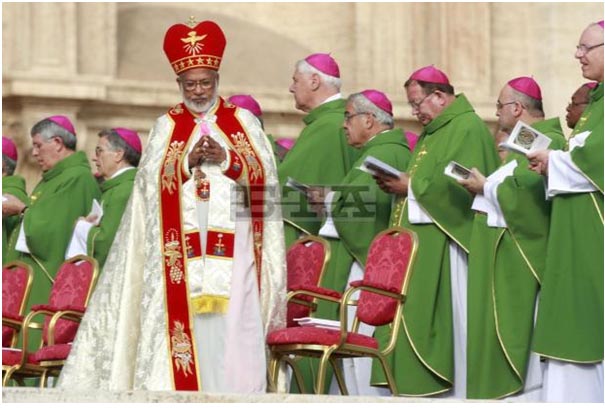
Bishops at the Synod, HB Mar
George Cardinal Alencherry,
Syro Malabar
Major-Archbishop in the
foreground.
VATICAN 7-28 Oct 2012:
World's bishops at synod -
50 years after Vatican II
The 13th Ordinary General
Assembly of the Synod of
Bishops will focus on a new
missionary consciousness
"aimed primarily at Europe
and North America,
concentrating on the
societies where Christianity
was once dominant but has
seen a dramatic drop in
influence in recent
decades." The statement
suggests the bishops won't
be wrestling with an issue
widely attributed the drop
-- clergy sex abuse
scandals, which haven't
spared bishops.
The Second Vatican Council,
announced by Pope John XXIII
in 1959, opened on 11 Oct
1962 and lasted for three
years. It remains a symbol,
controversial to some, of
the church's readiness to
adapt to modern life.
Few see any Vatican
readiness to place the sex
abuse scandals at the top of
the issues confronting the
venerable Church, though
Church-based inquiries have
been launched on both sides
of the Atlantic. According
to The Guardian newspaper on
Nov 30, Amnesty
International has called for
an independent inquiry into
clerical child sex abuse in
Northern Ireland after
internal Catholic Church
reports found the clergy
guilty of inaction over
paedophile priests. The
Church in the United States
has also had to deal with
numerous cases of clergy
abuse of children. Cardinal
Bernard Law resigned in
disgrace as Boston’s
archbishop in 2002 after the
priest sex abuse scandal
erupted in the United
States. AP reported on Nov
21 that he has resigned from
the Rome job that followed.
In a Dec 2 address to US
bishops, Pope Benedict XVI
acknowledged the sex abuse
issue, defended the Church's
handling of it, then moved
on to "the new
evangelization," the
official theme of the
October synod as the
recommended primary focus of
US bishops. He noted that
many of the bishops shared
with him their concern about
the "grave challenges"
presented by an increasingly
secularised society in the
United States.
In March, Catholic Culture
noted that the “new
evangelization” is a term
introduced into regular
usage at the Vatican by Pope
John Paul II, and taken up
by Pope Benedict XVI.
Archbishop Salvatore
Fisichella, the first
president of the new body,
has said the effort will be
aimed primarily at Europe
and North America,
concentrating on the
societies where Christianity
was once dominant but has
seen a dramatic drop in
influence in recent decades.
The world’s episcopal
conferences, and to the
synods of the Eastern
Catholic churches will be
asked to comment on the
preliminary document on
which the Synod's
deliberations will be based.
The preface to the document,
the lineamenta, explains
evangelization as a constant
duty of the Church, and the
“new evangelization” as an
effort designed to reach
“those who have moved away
from the Church, those who
have been baptized but not
sufficiently evangelized.”
The Pope urged the world's
bishops on Sunday Oct. 7
2012 to try to bring back
Catholics who have left the
church as he opened a
three-week meeting to
reinvigorate the church's
evangelization mission.
Some 262 cardinals, bishops
and priests from around the
world are in Rome for the
meeting, or synod, called to
give impetus to the pope's
efforts to re-evangelize
parts of the world where
Catholicism has fallen by
the wayside.
At the start of the Mass,
Benedict named two new
"doctors" of the church,
conferring one of the
Catholic Church's highest
honors on the 16th-century
Spanish preacher, St. John
of Avila, and the
12th-century German mystic,
St. Hildegard of Bingen.
They join the ranks of only
33 other church doctors who
have been singled out over
the course of Christianity
for their contributions to
and influence on Catholic
doctrine.
Benedict has long lamented
that in Europe and the
Americas, Catholics no
longer practice their faith
or pass it onto their
children. That concern is
reflected in the synod's
working document that will
form the basis of discussion
over the next three weeks.
"There is a clear link
between the crisis in faith
and the crisis in marriage,"
the pope said.
The so-called "new
evangelization" is a top
priority for Benedict, who
routinely laments how
cultures in Europe and the
West that were once
profoundly Christian have
become increasingly secular.
The church has been beset by
competition from rival
Protestant churches in Latin
America, dissent from
Catholics who oppose church
teaching on homosexuality
and desertions in the U.S.
and Europe from Catholics
fed up by years of sex abuse
scandals.
"The church exists to
evangelize," Benedict said
in his homily, urging a new
missionary spirit among the
church's pastors to reawaken
the faith among Catholics
who have been baptized but
no longer practice their
faith.
The synod coincides with the
50th anniversary of the
start of the Second Vatican
Council, the 1962-65 church
meetings that modernized the
church.
Cardinal Donald Wuerl, the
archbishop of Washington,
was named by Benedict to run
the meeting.
At the start of the Mass,
Cardinal Angelo Amato, head
of the Vatican's
saint-making office, read
aloud the reasons why the
church was proclaiming St.
John and St. Hildegard
doctors, saying their
"holiness and eminent
doctrine" shine hundreds of
years after they lived.
Benedict is particularly
fond of Hildegard, who was
considered a saint in her
native Germany but was never
officially proclaimed one by
the Vatican. Benedict, who
himself referred to
Hildegard as a saint,
earlier this year passed the
decree making her one
officially, a requirement
for her to be named a church
doctor.
The last church doctor named
was St. Therese of Lisieux,
France, in 1997. The first
church doctors were Sts.
Ambrose, Augustine, Jerome
and Gregory the Great.
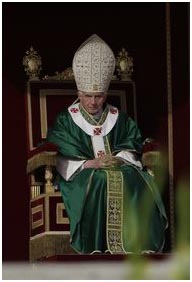
Pope Benedict XVI
leads a
Mass for the opening
of the
synod of bishops in
St.
Peter’s square at
the Vatican,
Sunday, Oct. 7,
2012.
Pope Benedict XVI,
standing
on a car at right,
waves to
faithful as he is
leaves after
celebrating a mass
for the
opening of the synod
of
bishops in St.
Peter's Square..
Pope Benedict has
also named
two new "doctors" of
the
church, conferring
the Catholic
Church's highest
honour on a
16th-century Spanish
preacher
St. John of Avila,
and to St.
Hildegard of Bingen,
a 12th
century German
mystic who was
canonised
earlier this year.
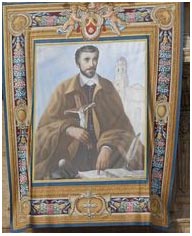
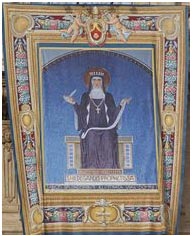
The tapestry of St.
John of
Avila hangs from the
facade
of St. Peter's
Basilica during
the opening of the
synod .
The tapestry of St.
Hildegard
of Bingen hangs from
the
facade of St.
Peter's Basilica
during the opening
of the
synod.
Church Historian Dr. A.
Mathias Mundadan Passes Away
World
renowned Indian Church
Historian Dr. A. M. Mundadan,
General Editor of the
prestigious History of
Christianity in India
series of the Church History
Association of India (CHAI),
and first president of the
Dharmaram Pontifical
Institute, Bangalore passed
away at 4.30 p. m. yesterday
the 31st of
August 2012 at Alwaye,
Ernakulam. The funeral will
take place today 1st
September at 2.30 p. m. at
the St. Ant[h]ony’s
Monastery, Alwaye next to
the railway station and a
few metres away from the
KSRTC station, where he was
residing now for a number of
years nursing the research
institute Jeevass which was
very close to his heart. A
member of the editorial
board of the St.
Thomas Christian
Encyclopaedia of India from 1971 and the
organiser of a number of
Christian Cultural and
Historical Exhibitions,
beginning with the
exhibition at Dharmaram
College, 1972, he has a
number of publications to
his credit including:
The History of Christianity
in India upto the Middle of
the Sixteenth Century(CHAI
1984), The Arrival of the
Portuguese in India and the
Thomas Christians under Mar
Jacob, 1498 – 1552 (1967),
Sixteenth Century Traditions
of St. Thomas Christians
(1970), Indian Christians:
Search for Identity and
Struggle for Autonomy
(1984). He was the
Rector of Dharmaram College
and the Provincial of the
Sacred Heart Province,
Rajagiri of the CMI
Congregation for more than
one term each. The last
article he had completed was
autobiographical in nature
written for CHAI’s Platinum
Jubilee Volume India’s
Christian Heritage,
edited by Oberland Snaitang
and George Menachery. Bishop
Gratian Mundadan is the
younger brother of the
deceased. May his great
soul rest in peace. The
Church History Association
of India is being
represented at the funeral
by Prof. George Menachery
and Sebastian Edathikkavil
CMI who will convey
condolences on behalf of Dr.
Oliver Jetti, President, Dr.
George Oommen, Gen.
Secretary, and D r. Francis
Thonippara, Treasurer of the
CHAI.
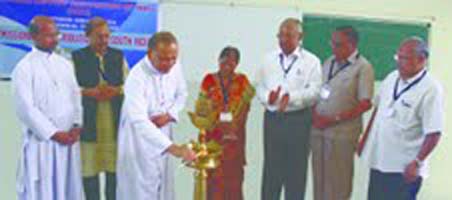
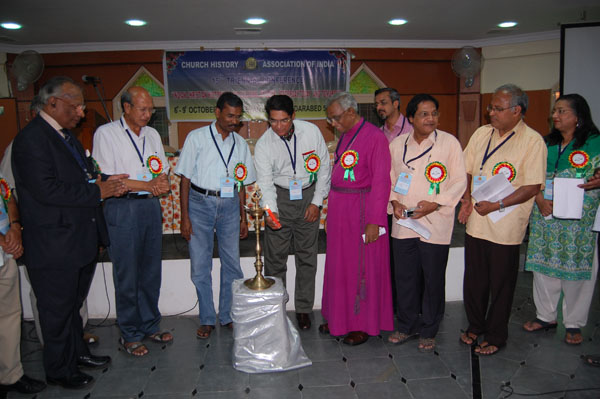
The 15th Triennial Conference of the South Indian Branch of the Church History Association of India CHAI (15 – 17 May 2012) was inaugurated at Bangalore by the Vice-Chancellor of the Christ University Dr. Thomas C. Matthew by lighting a bronze lamp in the DVK Philosophy auditorium in the presence of Dr. Saju Chackalakkal (President DVK), CHAI Natioal President Dr. Oliver Jetti, Dr. Prameela Devi, Prof. George Menachery, Dr. Pasupulethi Manasseh (CHAI SIB Secretary), and Dr. Francis Thonippara (CHAI SIB President). The valedictory function was addressed by Dr. Thomas Aykkara, Rector, Dharmaram College
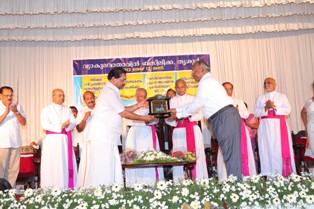
The Bishop
Vazhappilly Memorial Church
History Award was presented
to Prof. George Menachery at
the Basilica Hall, Thrissur
by Sri P. C. Chacko, M. P.
in the presence of the Mayor
of Thrissur Sri I. P. Paul,
Bishops Antony Chirayath of
Sagar, Bp. Thomas
Vazhappilly of Mysore,
Bishop Emeritus Paul
Chittilappilly, Archbishop
Andrews Thazhath, Bp.
Raphael Thattil, M.P.Vincent
MLA, P. Madhavan MLA,
Kaviyoor Ponnamma, Rector
Dr. Louis Edakkalathur,
Prof. V. G. Thampy and
others. The Award purse of
Rs. 25,000 was handed over
to Chev. Prof. Menachery by
Archbishop Thazhath.
Award for church historian
Menachery
Press Trust of India /
Thrissur May 08, 2012, 21:35
Prof George Menachery,
considered an authority on
Christianity in India, has
been selected for the Bishop
Francis Vazhappilli memorial
award for his contrbutions
to church studies.
The award, instituted by
Shrine Basilica of Our Lady
of Dolours here to recognize
outstanding contributions in
the field of the history of
Christianity in India,
carries a purse of Rs
25,000, citation and
memento.
It will be presented to
Menachery at the
commemorative function on
the 70th death anniversary
of Bishop Francis
Vazhappilly on May 12.
Vazhappilly was the first
Bishop of Thrissur Diocese
and also the founder of the
Basilica.
Menacherry was selected for
the award by a panel of
church historians headed by
Basilica Rector Rev. Louis
Edakkalathur, a press
release issued by the
Basilica said.
He had edited and produced
"The St. Thomas Christian
Enyclopaedia Of India",
acclaimed as the first
Christian Encyclopaedia
based on a particular
country.
He has to his credit a large
number of publications,
research papers, articles,
radio talks and TV
programmes. His research
activities and lectures have
taken him to more than 25
countries in four
continents.
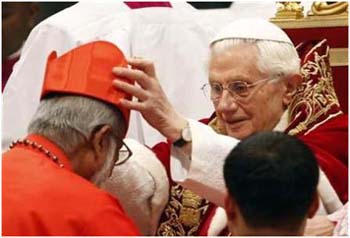
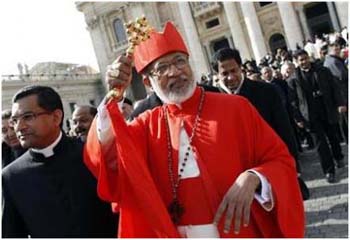
India's
George Alencherry among 22
new cardinals inducted by
Pope
Pope
Benedict, putting
his mark on his
Church's future, on
Saturday inducted 22
men including
India's George
Alencherry into the
exclusive group of
cardinals who will
one day elect one of
their own to succeed
him as leader of the
world's 1.3 billion
Roman Catholics.
Among
the most prominent
in the group is New
York's Archbishop
Timothy Dolan, who
is already being
touted by some
Vatican experts as a
possible future
candidate to become
the first American
pope.
Benedict, who turns
85 in April elevated
the men to the
highest Church rank
below him at a
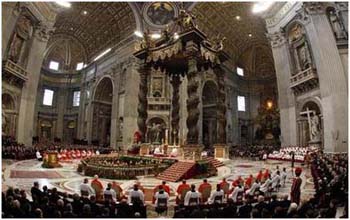
ceremony in St.
Peter's Basilica
known as a
consistory.
"Cardinals are
entrusted with the
service of love:
love for God, love
for his Church, an
absolute and
unconditional love
for his brothers and
sisters, even unto
shedding their
blood, if necessary
(in defence of the
faith)," the pope
told the new
cardinals before
giving them their
rings and red
birettas, or hats.
"Furthermore, they
are asked to serve
the Church with love
and vigour, with the
transparency and
wisdom of teachers,
with the energy and
strength of
shepherds, with the
fidelity and courage
of martyrs," he
said.
The
new cardinals are
from the United
States, Hong Kong,
Italy, Portugal,
Spain, Brazil,
India, Canada, the
Czech Republic, the
Netherlands,
Romania, Belgium,
and Malta.
Eighteen of them are
aged under 80 and
thus will be
eligible to enter
the secret conclave
to elect the next
pope from among
their own ranks.
Twelve of those are
Europeans, bringing
the number of
"cardinal electors"
from the continent
to 67 out of 125.
With
the new
appointments,
Benedict, who was
elected in a secret
conclave in 2005,
has now named more
than half the
cardinal electors.
The others were
named by his
predecessor John
Paul.
Compared to the 67
"cardinal electors"
from Europe, Latin
America now has 22,
North America has
15, Africa has 11,
Asia has nine and
Oceania has one.
Cardinals are the
pope's closest
collaborators in the
Vatican and around
the world. They lead
major archdioceses
and run key Vatican
departments that
help the pope decide
Church policy and
doctrine that can
affect the lives of
Catholics worldwide.
FIRST, BE MEN OF
RELIGION, POPE TELLS
NEW CARDINALS
At
the ceremony, the
pope told the new
cardinals that while
they will cooperate
closely with him in
"the delicate task"
of governing the
worldwide Church,
they must first and
foremost be men of
religion.
"May
your mission in the
Church and the world
always be 'in
Christ' alone,
responding to his
logic and not that
of the world, and
may it be illumined
by faith and
animated by charity
which comes to us
from the glorious
Cross of the Lord,"
he said.
Benedict also asked
for prayers so that
he can guide the
Church "with a firm
and humble hand".
Numerically, at
least, the pope has
increased the
chances that the
next pontiff will be
a conservative
European but there
have been surprises
in past conclaves.
The
pope is a
conservative on
matters of faith and
sexual morals such
as birth control,
homosexuality and
the ban on women
priests. Each time
he names cardinals
he puts his stamp on
Roman Catholicism's
future by choosing
men who share his
views.
Besides Dolan, other
prominent new
cardinals are John
Tong Hon, archbishop
of Hong Kong, and
Rainer Maria Woelki,
archbishop of Berlin
in the pope's native
Germany.
Seven
of new "cardinal
electors" under the
age of 80 are
Italian - six of
them members of the
Vatican's central
administration and
the other the
archbishop of
Florence.
Popes
usually reign for
life but in a book
last year, Benedict
said he would not
hesitate to become
the first pontiff to
resign willingly in
more than 700 years
if he felt himself
no longer able,
"physically,
psychologically and
spiritually", to run
the Catholic Church.
Several popes in
recent history,
including the late
Pope John Paul,
considered resigning
for health reasons,
but none did so.
The
last pope to resign
willingly was
Celestine V in 1294
after reigning for
only five months.
Gregory XII
reluctantly
abdicated in 1415 to
end a dispute with a
rival claimant to
the Holy See.
The
Vatican says the
pope's health is
good but he needs to
conserve his
strength. Last
October he started
using a mobile
platform which aides
use to wheel him up
the central aisle of
St Peter's Basilica.
Kerala elated as
Alencherry ordained
cardinal
Catholics, and the
people at large, in
Kerala were elated
as Mar George
Alencherry, the
Major Archbishop of
Ernakulam-Angamaly
diocese of the Syro-Malabar
Church, was on
Saturday ordained a
cardinal of the
Roman Catholic
Church. Many of the
Catholics, who form
50 per cent of the
over seven million
Christians in Kerala,
were glued to the
live coverage from
the Vatican as
Alencherry was
ordained by the Pope
along with 21 other
bishops from various
countries.
Alencherry, 66,
becomes the youngest
cardinal in the
country and the
fourth Keralite to
be ordained.
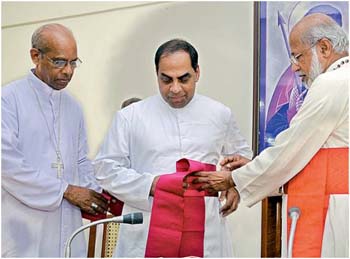
Cardinal Mar George
Alencherry (right)
helps Monsignor
Kuriakose
Bharanikulangara
with the episcopal
sash after
announcing his
appointment as the
first bishop of new
Faridabad diocese,
in Kochi on Tuesday.
— DC
Cardinal clears
the air
Pope Benedict XVI on
Tuesday created a
new diocese of
Faridabad for the
Syro-Malabar
Catholic Church and
appointed Monsignor
Kuriakose
Bharanikulangara,
53, the deputy
nuncio of Vatican in
Germany, as its
first bishop.
The announcement was
made simultaneously
in Vatican and in
Kochi. Mar
Bharanikulangara
will have the title
of archbishop as
well.
Making the
announcement at
Mount St Thomas,
Kochi, the seat of
the Syro-Malabar
Church, Cardinal Mar
George Alencherry
said the new diocese
covers the region of
National Capital
Territory of Delhi
and states of
Haryana, Punjab,
Himachal Pradesh,
and Jammu Kashmir
and the
Gautambudhanagar and
Ghaziabad districts
of UP.
The new diocese will
look after the
spiritual needs of
nearly one lakh Syro-Malabar
catholics. With
this, the number of
dioceses of the
church has gone up
to 30, including the
10 outside Kerala.
The Faridabad
diocese will have
multiple
jurisdiction like
the Kalyan diocese
of the Church (Other
8 dioceses outside
Kerala come under
the territorial
jurisdiction of
Latin Catholic
dioceses).
Mar Bharanikulangara,
born to Alia and
late B.V. Antony on
February 1, 1959 at
Karippassery in the
archdiocese of
Ernakulam-Angamaly,
has served as a
diplomat of the
Vatican in the last
18 years, including
its nunciatures in
the UN, Iraq,
Jordan, Venezuela,
Republic of Congo
and Gibon.
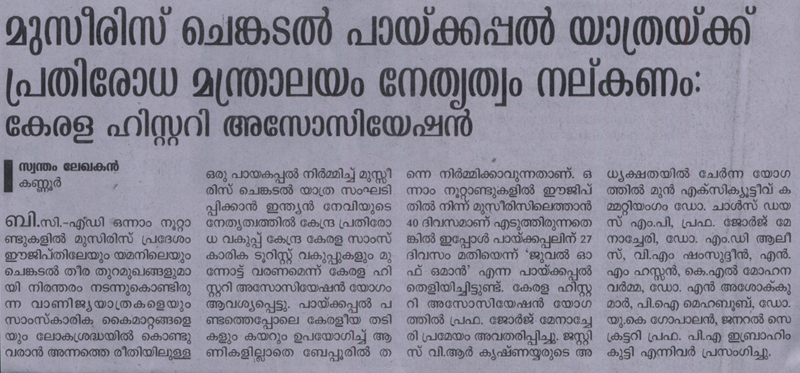
Muziris letter to Defence
Minister AK Antony
Respeced Minister for
Defence,
Sir,
Kindly go
through the two
attachments.Your
Excellency,It would be great
, both for India and Kerala,
if a Muziris Voyage along
the lines of the First
century voyages from and to
the Red Sea Ports of
Berinice, Aden- and Socotra
- which were frequent in the
early centuries - could
be re enacted as suggested
by the KeralaHistory
Association headed by the
venerable Justice V R
Krishna Iyer. Such a trip
would get immense world
media attention and will go
a long way to promote
Tourism in the country and
to project a glorious image
of India's and Kerala's
culture and achievements in
the early centuries BCE and
ACE. The Indian Navy could
play a pivotal role in such
a trip as was played by the
Omani Navy in the voyageof
the 'Jewel of
Muscat'.Entreating your good
selves and the Navy to
kindly take immediate and
effectivesteps in the
matter, and to include the
necessary funds in the forth
coming budget itsef for 1. a
feasibility study, 2. for a
Project Report, 3. for the
construction of a Sail Ship
at Beypore or elsewhere, and
4. for the training of a
dedicated team of sailors
and navigators, and 5. to
form a team of researcheras
for the purpose.
Thanking you,
Yours
sincerely,
Prof. George
Menachery, West Bazaar,
Ollur, Trichur District,
Kerala 6803060091
98460337130091 487 235 43980091
487 235 2468kunjethy@gmail.com,kunjethy@yahoo.com
Muziris Red Sea Voyage
Re-enact Muziris voyages,
KHA tells Navy
K.A. MARTIN & S. ANANDAN
(THE HINDU 21/I/12)
Defence Ministry told to
take the lead in rebuilding
such a vessel at Beypore
The Kerala History
Association (KHA) headed by
jurist V.R. Krishna Iyer has
urged the Indian Navy to
join hands with the
Departments of Cultural
Affairs and Tourism to
re-enact the voyages of
ancient trade vessels from
the ancient port of Muziris
to the Red Sea around 2000
years ago.
In a key resolution, passed
early this month, the
association asked the Union
Defence Ministry to take the
lead in rebuilding such a
cargo vessel at Beypore, a
historical boatbuilding hub
in northern Kerala renowned
for its esoteric technology
adept at building ‘urus'
[cargo sail yachts] using
locally available timber and
coir.
The association felt that
recreating a cargo vessel
that plied the seas from
Muziris to link ports in the
Red Sea on the Egyptian and
the Yemeni coasts would
highlight the strong
historical links between the
two important regions of the
world besides bringing to
the world's attention their
cultural exchanges.
Historian K.N. Panikkar
endorsed the idea when he
told The Hindu on Friday
that it would be good if the
Navy undertook such a
mission.
He recalled that such
efforts had been made in
other parts of the world,
including in the recreation
of journeys along the old
Silk Route.
It must have taken 40 days
to reach Muziris from Egypt
by sea in the olden times,
said George Menacherry, a
church historian, who
piloted the resolution at
the association's meeting.
He, however, added that the
‘Jewel of Muscat,' a replica
of the late first-millennium
trading vessel that sailed
around the world jointly
created by the Sultanate of
Oman and the Government of
Singapore, had shown that
the journey would take just
27 days now.
Approached for its comments,
the Navy said although it
had not received the
proposal yet, it would study
the merits of the project
before taking a call on
that.
“While the Navy has always
taken a keen interest in
understanding, conserving,
and contributing to build
upon the rich maritime
history that India boasts,
collaboration in such
ventures require decision at
the highest-level,” said
Navy sources.
In the State, the Navy has
earlier assisted the
archaeological excavation
team at Pattanam (where
vestiges of Kerala's trade
with the Mediterranean
countries were exhumed) by
sending its deep-sea divers
to conduct underwater
surveys.
It sustains a chair on
maritime history at Calicut
University and the local
chapter of the Maritime
History Society is headed by
the Southern Naval Command's
Flag Officer Sea Training (FOST).
When the ‘Jewel of Muscat',
currently installed as a
maritime history museum in
Singapore after a historical
sail along the ancient
Middle East and the Far
East, was constructed in
Oman on the lines of a
shipwrecked ninth-century
cargo vessel, uru-builders
of Beypore were called in to
build it.
Built without nails or
screws and with planks sewn
together using coconut
fibres, the sail yacht was
made by over a dozen
carpenters and rope-makers
from Beypore.
“There was a time when the
boatbuilding industry here
had its hands full, building
about 60 urus
simultaneously. Even now,
they build about six to
seven urus for foreign
customers who use them for
tourism promotion. They
recently constructed one for
a French customer. Exponents
of the esoteric technology
of uru-making are not many
now. But still there are a
few and scores of workers
are employed by them to
carry out the job. They can
create mock-ups of ancient
ships as well,” said M.P.
Padmanabhan, INTUC national
leader and an authority on
the subject.
HOLY LAND PILGRIMAGE GOVT.
SUBSIDY
Andhra Pradesh Govt.
Minority Welfare Dept.
Scheme & Govt. Order
High
Court Verdict Setting aside
objections to Pilgrimage
Subsidy
Letter to the Hon'ble Chief
Minister of Kerala
Prof.
George Menachery
From
Chev. Prof. George Menachery
Chief Editor St. Thomas
Christian Encyclopaedia of
India
Member Archdiocesan Pastoral
Council
Member Of the Governing Body
Christian Chair, Calicut
University
Pallinada
Ollur Kerala 680306
09846033713, 04872352468,
04872354398
kunjethy@gmail.com,kunjethy@yahoo.com
www.indianchristianity.com,www.nazraney.com.www.menachery.org
To
Sri Oommen Chandy
Honb'le Chief Minister of
Kerala
Thiruvananthapuram
Respected Sir,
We the representatives of
the Nazraney Maha
Kudumbayogam (Myself as
President) had visited you
at your residence and
submitted a petition signed
by the President, Secretary,
Office Secretary, and Fr. K.
M. George of the Pazhaya
Seminary humbly requesting
you to kindly grant a State
subsidy to the Holy Land
pilgrims from Kerala. At
that time you had kindly
consented to consider the
the also the desire for
setting up a St. Thomas
University, to make
arrangements for the
protection and conservation
of ancient Christian
monuments, and to consider
the Holy LandPilgrimage
subsidy. However when you
asked for details of such
subsidies granted by other
South Indian States we were
unable to provide the
details during such a short
interview.
I am herewith sending the
copy of the AP Government
Order granting Holy Land
Pilgrimage Subsidy to the
tune of Rs. 20,000/- per
pilgrim.The detailed GO also
lays down conditions for
tour operators and
parameters for the
aselection of pilgrims. In
the first year AP Govt. had
set aside an amount of Rs.
Two Crores for the purpose
to subsidise the pilgrimage
of 1000 pilgrims.
This and the other exemplary
schemes of the AP Minorities
Development Finance
Department are also
enclosed.whichcould perhaps
be followed by your
honourable Goverment also.
Also enclosed is the Court
Judgement of the AP High
Court setting aside all
objections raised by
interested parties against
the granting of the said
subsidy.
We had also met in
Trivandrum other ministers
and legislators, including
Sarvasri K. M. Mani, T.M.
Jacob, P.J.Joseph, K.C.
Joseph, Abdl Rabb, and the
MLAs C.F.Thomas, Mons
Joseph, Ravindranath, M. P.
Vincent and C. who all
expressed their support and
goodwill for all these
efforts, and many had also
asked for copies of the AP
GO which I was able to
procure from the AP Ministry
in Hyderabad recently.
Awaiting your government,s
kind and favorable response
and action,
Yours faithfully,
Prof. George Menachery.
Copy to: Hon'bleMinister Sri
K. M. Mani
Sri Abdul Rubb
Sri. T. M. Jacob
Sri P. J. Joseph
Sri K. C. Joseph
Copies also to Sri P.
C.George
C. F. Thomas
Mons Joseph
Prof. Ravindranath
M. P. Vincent
& Other Hon’ble Minsters and
Legislators we could not
meet on that occasion.
Copy of letters recd. From
AP with copies of AP GO on
Subsidy to Holy Land
Pilgrims and High Court
Order setting aside all
objections to proceeding
with the Holy Land
Pilgrimage Subsidies and
also Summary of Schemes of
the AP Govt. Minorities
Welfare Finance Corporation
and AP Govt Minorities
Welfare Department.
Dear Prof.George Menachary,
Just a short note to send
you the attached GO
concerning the Holy Land
Pilgrimage for Christians of
Andhra Pradesh.
All the best for your
efforts to get similar
benefits to the
Christians in Kerala.
With warmest regards,
Dr.Jetti A.Oliver
JAO/kbm
Dear Prof. George Menachery,
Hope you had a safe travel
back home. This note is to
send you the
attached copy of the
judgment of the AP High
Court lifting the ban on
pilgrimage of Christians to
the Holy Land duly sponsored
by the
Minority Welfare Department
of the Govt. of A.P0.
Attached also are
a few paper clippings as
desired.
Copy of the petition
personally handed over to
your good selves at the
Chief Minister’s residence,
Trivandrum by the Mar Thoma
Nazraney Maha Kudumbayogam:
Petition made by the
delegates empowered by the
extraordinary conference of
the St. Thomas Maha
Kudumbayogam and invited
scholars held at
Kuruvilangad on 3rd July,
2011 to the Hon’bleChief
Minister of Kerala Sri
Oommen Chandy Esq.:,
Thiruvananthapuram.
Hon’ble Chief Minister, Sir,
We the delegates of the St.
Thomas Maha Kudumbayogam and
representatives of the
scholars and cultural
activists of the various
Nazraney Christian
Denominations take this
opportunity to bring to your
attention the incomparable
record of service rendered
by these Thomas Christian
Communities to the people of
Kerala in the fields of
culture, education, and
social service and to
request you and your
respected Government to
kindly take the initiative
to implement and realise the
following :
1. To establish a University
in the name of St. Thomas
the Apostle of Christ who
was the founder of the
Christian Faith adhered to
by the lakhs and lakhs of
members of the Syro Malabar
Church, the Syrian Orthodox
Church, the Jacobite Syrian
Church, the Mar Thoma
Church, the Syro Malankara
Church, the Chaldean Church
and many other Churches and
denominations of Kerala, on
the pattern of the Sri
Sankara Sanskrit University
of Kalady or the Mahathma
Gandhi University of
Kottayam.
2. To allow a pilgrim grant
and/or subsidy to all
Christians of Kerala,
irrespective of sect or
denomination or rite
desirous of making a
Pilgrimage to the places
associated with Lord Jesus
Christ in the New Testament
and the Venerable Fathers of
the Old Testament in the
Holy Land to promote
spirituality and true
religious fervour.
3. To instruct the
Departments of Archaeology
and Tourism to protect,
conserve, and popularise all
the different Jewish and
Christian Monuments in the
State, including the
Megalithic monuments..
Yours faithfully,
1. Rev. Dr. K.M. George.,
Old Seminary, Kottayam
2. Chev. Prof. George
Menachery, Historian,
Trhrissur, President
3.Abram Ben Hur, General
Secretary, St. Thomas Maha
Kudumba Yogam, Archadeacon
Centre, Pakalomattom P. O.,
Kuruvilangad, Kottayam.
4.Jacob Thomas Edassery,
Kuravilangad.
5.Prof. Dr. Tarsis Joseph,
Kuravilangad.
CHURCH HISTORY ASSOCIATION
OF INDIA
15th TRIENNIAL CONFERENCE
AND PLATINUM JUBILEE
CELEBRATIONS
Hyderabad 2011
Inauguration of the
15th Triennial
Conference of CHAI,
the Church History
Association of India
at Jeevan Jyothi CRI
Andhra Pradesh
Centre by the
Cultural Secretary
of the Govt. of AP
Dr. Chellappa IAS
presided over by Dr.
Sen IPS DGP and
Bishop Rajaratnam of
Medak. In the
picture (l to r) are
Prof. George
Menachery (Secretary
General CHAI), Dr.
Oberland Snaitang
(President), Dr.
George Oommen (Dehra
Dun), Dr. Jos
Kalappura (Patna),
Dr. Francis
Thonippara
(President DVK,
Bangalore) and Prof.
Agnes DeSa (Bombay
Jt. Secretary) (6th
Oct)
Inauguration of the
Platinum Jubilee
Celebrations of CHAI
the Church History
Association of India
at the Jubilee Hall
of the Govt. of
Andhra Pradesh by
Sri Francisco
Sardhanha, former
speaker and Chief
Minister of Goa and
at present MP and
Chairman of the
Plarliamentary
Estimates Committee
by releasing the
1000 page Platinum
Jubilee Volume of
CHAI "Christian
Heritage of India".
Others in the
picture are
Sebastian
Edathikkavil cmi
(Treasurer), Dr.
Oliver A. Jetti
(Allahabad
University and
President of the
Organising
Committee), Ms.
Christine MLA, Swami
Aravinda (President
of the State Hare
Krishna Movement),
Prof. George
Menachery (Secretary
General), Dr.
Oberland Snaitang
(President CHAI),
Dr. "Cardinal"
Thomas Edmunds
(Vice-President),
and Dr. Charles Dias
MP (Chai Member and
Office Bearer).
The Platinum
Jubilee Celebrations and
15th Triennial Conference of
the Church History
Association of India (CHAI)
will be held from
October 6 to 9, 2011
(i.e. from the
Vijayadashami Thursday to
the following Sunday) at
HYDERABAD, A.P. at Jeevan
Jyothi, Begumpet, Hyderabad.
Begumpet is about 4kms from
Secunderabad railway station
and 6kms from
Hyderabad(Nampally) railway
station. Bangalore train
terminates at Kacheguda
railway station which is
about 10kms from the
venue.Prepaid taxis are
available at the
Airport.Registration fee for
Delegates / Participants is
Rs.300/- Boarding and
lodging will be provided at
no extra cost. The half day
city tour also will be
financed by the organisers.
Conference Theme:
Indian
Christian Historical and
Cultural Studies -Yesterday,
Today, Tomorrow
1. CHAI is pleased to invite
Scholarly Papers related to
the above theme, adhering
uniformly to any of the
standard style sheets, from
CHAI members and other
scholars. The duration of
the paper will be 20 minutes
followed by discussion which
will not exceed 10 minutes.
Title of paper to be sent
before the 10th of August
2011; Synopsis to be
received by 20th August
2011; and the complete paper
to be received before 31st
August, 2011 and in any case
not later than the 10th of
September 2011by e-mail
(preferably in MS Word or
Adobe Pagemaker) in addition
to a hard copy by post or
courier addressed to the
Secretary General Prof.
George Menachery, Pallinada,
Ollur, Kerala, 680306;
kunjethy@gmail.com,
kunjethy@yahoo.com. For
other particulars contact
the Secretary General 0091
9846033713, +91 487 2352468,
+91 487 2354398 or other
National office-bearers.
2. The last date for
receiving entries for the
CHAI Platinum Jubilee All
India Essay Competition on
the theme"Preservation
of Christian Monuments and
Landmarks in India" (1000
to 1500 words) is 31st
August 2011. Separate
competitions are being held
for a) Seminarians, b)
University and College
Students, and c) the General
Public. In each category
there will be three prizes
of Rs. 8000/-, 5000/-, and
2000/-.For further details
contact the Convener Dr.
Varghese Perayilvarghesepera@yahoo.co.in 09447359139,
Prof. Agnes De Sa, ahdesa@rediffmail.com 09967801723,
or the Rev. Jeremiah ACTC
Hyderabad prjapadam@gmail.com 09247463467
or the General Secretary
09846033713.
3. The Platinum Jubilee
Commemoration Volume
containing 75 scholarly
papers on India's
Christian Heritage
is in the press. For details
contact the chief editors
Dr. Oberland Snaitang
09856642859 or Prof. George
Menachery 09846033713.
4. Objects of historical,
artistic,
archaeological...significance
are invited for the
Christian Historico-Cultural
Exhibition to be held at the
venue on the theme
Indian Christian Heritage
of the South, West, North,
East, and North-East.
Contact the local organising
committee: Dr. Oliver
04027002498, Rev. Jeremiah
09247463467 or the CHAI
Southern India Branch
Secretary cum Treasurer Dr.
Manasseh 09848123927.
5. Useful numbers for
details regarding
registration of delegates
and participants,
accommodation, travel
details, local taxi and auto
fares, bus routes, other
directions: Dr. Oliver
04027002498, Rev. Jeremiah
09247463467 or the CHAI
Southern India Branch
Secretary cum Treasurer Dr.
Manasseh 09848123927 or the
General Secretary
09846033713, 09400494398.
CHAI members are cordially
invited to participate.
Other interested scholars
also may kindly contact the
organisers.
KAKKANAD, 12 Apr, 2011, 10:30 Hrs (UCAN)
Tens of thousands of mourners bid a tearful farewell to Cardinal Varkey Vithayathil, head of the Syro-Malabar Church (SMC) April 10.
The 84-year-old cardinal, who died of a heart attack on April 1 in Kochi, Kerala, was interred with full state honors at the city’s St. Mary’s Basilica Cathedral. Archbishop Cyril Vasil, secretary of the Congregation for Oriental Churches, represented Pope Benedict XVII at the funeral.
Bishops from the other two Latin and Syro-Malankara Catholic rites, other Christian denominations, priests and Religious, also attended the funeral.
Nitin Gadkari, president of the Hindu right wing Bharatiya Janata Party, federal minister Vayalar Ravi, Congress leader Oscar Fernandes, several state ministers and other senior politicians were also present.
The ceremonies started at 3:30 p.m. with a requiem Mass led by Bishop Bosco Puthur, the interim administrator of the SMC.
The cardinal’s body was then taken out in a procession around the parish before his return to the cathedral for the funeral Mass and his interment in the sanctum of the basilica.
The cardinal’s last journey started the day before from Little Flower Hospital, Angamaly when his body was taken to St. Thomas Mount, Kakkanad, headquarters of the SMC, 40km away, and then to the basilica where people paid their respects.
During the funeral orations, Catholic Bishops’ Conference of India President Cardinal Oswald Gracious said Cardinal Vithayathil was a man full of faith, peace and devotion. “We have to carry forward his vision by following his footsteps.”
Condolence messages from Indian President Pratibha Patil and Prime Minister Manmohan Singh were also read out.
Pope John Paul II’s final resting place ready
VATICAN CITY, 13 Apr, 2011, 10:50 Hrs (CatholicNewsAgency)
The final resting place of Pope John Paul II has now been prepared.
In a private ceremony in St. Peter’s Basilica April 8, the remains of Pope Innocent XI were moved from the altar in the Chapel of St. Sebastian to make way for the soon-to-be beatified Pope John Paul.
Pope John Paul is presently buried in the crypt below the basilica’s high altar. His body will be transferred following his beatification on May 1.
“This is the place where Blessed John Paul II will go because it is a particularly suitable chapel,” Vatican spokesman Father Federico Lombardi, SJ, said in remarks to journalists. “It’s quite near to the entrance of the basilica and just next to (Michelangelo’s) Pieta.”
Cardinal Angelo Comastri, the senior Italian cleric in charge of St. Peter’s, presided over the brief ceremony to move the body of Pope Innocent. The service included a candle-lit procession during which the names of all the popes who’ve become saints were intoned.
The remains of the 17th century pope were transferred to the basilica’s Altar of the Transfiguration. The altar sits to the left of the high altar, which is overshadowed by a marble statue of St. Andrew the Apostle.
Meanwhile, the altar of St. Sebastian has been restored with work being undertaken to improve its lighting and audio systems.
The translation of Pope John Paul’s coffin will also take place in private. The public, however, will be able to venerate the newly beatified Pope beginning from the afternoon of May 1 onwards.
“Beatification” is the second step in a three-stage process the Catholic Church has created for declaring a deceased person a saint. Beatification confers the title “Blessed.”
H E
Varkey Card. Vithayathil,
Major Archbishop of the Syro
Malabar Church presents
Prof. George Menachery with
the first Syro Malabar
Church Research Award in the
presence of more than thirty
Syro Malabar Bishops /
Archbishops
His Eminence Varkey Cardinal
Vithayathil the Major
Archbishop greets Prof.
George Menachery by
presenting him a Bouque on
his being selected for the
LRC Award
Mar
Varkey Vithayathil presents
Pope Benedict XVI the first
copy of the Third Volume of
the St. Thomas Christian
Encyclopaedia of India at
Castel Gandolfo
Justice V. R.
Krishna Iyer speaks after
receiving the first copy of
the Indian Church History
Classics Vol. I “The
Nazranies” from His Eminence
Mar Varkey Card. Vithayathil.
His Excellency Archbishop Salvatore
Pennacchio, Apostolic Nuncio in
India, New Delhi
Cardinal Gracias and Cardinal Toppo Dedicate
the St. Thomas Christian Encyclopaedia of
India to the Nation
GUWAHATI, March 3
The publication of the three volumes of the
St. Thomas Christian Encyclopaedia of
India is a worthy model for the
world Churches and an incomparable
achievement and contribution of the Church
in India, stated Oswald Cardinal Gracias in
Guwahati, dedicating the work to the nation.
The publication of the third and final
volume is something of which the
Encyclopaedia team can be justly proud, but
they should not rest on their oars but must
continue their much needed work of service
to the Church in India today, His Eminence
went on to say. Telespore P. Cardinal Toppo
dedicated the volumes to the world Christian
community. The two Cardinals officially
released the Encyclopaedia by exchanging
copies of the work, in the presence of
Archbishops and Bishops from all over India
and members of the CBCI Commissions.
Archbishop Andrews Thazhath, Prof. George
Menachery the Editor of the Encyclopaedia,
and Dr. George Plathottam the secretary of
the CBCI Commission for Media also spoke on
the occasion.
The Encyclopaedia comprises the
contributions of hundreds of well-known
scholars from all over India and abroad.
There are articles on almost every aspect of
Christianity in india, dealing with all
chronological, denominational, and
geographical divisions. The more than
thousand illustrations on art plates, half
of them on full colour art plates, in
addition to the dozens of maps including a
whole Christian and Linguistic atlas of
India, and the graphs, tables, figures, and
sketches go to make the work an exhaustive
reference tool. Each major article is
supported by bibliographies and inclusive
end-notes, making the encyclopaedia an
indispensible reference work for seminaries
and teheological colleges. universities and
colleges, and libraries of ecclesiastical
establishments and headquarters and
formation houses of religious congregations.
Justice V. R. Krishna Aiyer [former Supreme
Court Judge and president,
History Assn.] on the 3rd Volume of the
Encyclopaedia:
"The third
volume of the book St. Thomas Christian
Encyclopaedia of India is an
extraordinary work with focus on
Christianity but being Cyclopaedic has
learned chapters on Hinduism and Islam.
Truly it is a holistic work, an eclectic
theological composite piece. The chapter on
Hinduism illumines its ancient and
geographical character and true source of
its origin. Read on to learn the basic
principles and you will learn that this
Sanatana Dharma (moral values for all
times)... Professor Menachery has done great
service to all religions by weaving all of
them into a new fabric in his epic
voluminous trinity which if popularly read
and discussed and read in libraries will
surely be the beginning of Jesus and Sankara
and Mohammed as the Founders of a New World
Order of peace and stability of human rights
and equality with a bias of equity. Gandhiji
and Vivekananda did it in different ways. I
deeply appreciate the wonderful work of
Professor George Menachery. It is not
narrowly Christian but broadly universal in
thinking. Jesus was the greatest humanist
revolutionary and died for a dynamic
dialectical world order...
The Syro
Malabar
Major
Archbishop
and Cardinal
His Eminence
Mar Varkey
Vithayathil
presents the
first ever
Syro Malabar
Church Award
instituted
through the
Liturgical
Research
Centre for
"Outstanding
Contribution
to the
Promotion
of Syro
Malabar
Heritage",
to Chevalier
Professor
George
Menachery,
editor of
the St.
Thomas
Christian
Encyclopaedia
of India and
the Indian
Church
History
Classics,
at Mount St.
Thomas,
Kakkanad,
Ernakulam,
Kochi on 1st
Makaram -
14th Jan.,
2010, in the
presence of
the 36
Bishops and
Archbishops
of that
Church.
Click to see
Deepika
report.
His Eminent Beatitude Mar Vakkey Cardinal Vithayathil, Major ArchBishop and Head of the Syro Malabar Church, and President of the CBCI, who was admitted to the hospital Monday night following a heart condition has registered considerable improvement in his condition and has been tranferred from the Ventilator. However His Eminence is still under active medical observation at the Lissie Hospital, Ernakulam. Visitors are strictly prohibited. -SARAS NEWS
Cardinal Varkey Vithayathil Critical
The condition of Cardinal Varkey Vithayathil, Major Archbishop of the Syro Malabar Church, who was admitted to the Lissie Hospital on Monday night after a cardiac arrest, continues to be critical.
He is on life support system after the doctors successfully carried out an angioplasty to remove a major block in the artery, said Fr. Paul Thelekkat, spokesman for the Syro-Malabar Church.
The Cardinal suffered the cardiac arrest on Monday night while he was at the headquarters of the Syro-Malabar Church at Mount St. Thomas Kakkanad. He was immediately rushed to the hospital. The condition of the Cardinal, who is 82-years-old, is reported to be stable,
Major Archbishop of the Syro-Malabar Church Mar varkey Cardinal Vithayathil honours Prof. George Menachery with a bouquet on the latter's being selected for the first Liturgical Research Centre Award of the Syro Malabar Church. Present on the dais were Bishop Mar James Pazhayattil, Archbishop Mar Andrews thazhath, Bishop Mar Thomas Chakiath, and Bishop Mar Joseph Kallarangatt
Vatican
City, Sept.
19
At Castel
Gandolfo,
Varkey
Cardinal
Vithayathil,
Major Arch
Bishop and
Head of the
Syro -
Malabar
Church,
presents a
copy of the
third and
final volume
of the St.
Thomas
Christian
Encyclopaedia
of India,
the
reference
work on
Christianity
in India
edited by
Prof. George
Menachery,
along with
the Alphonsa
Coin to His
Holiness
Pope
Benedict XVI
"Heads and Fathers"
of all the Eastern
Catholic Churches
discuss future
course of action
with with Pope
Benedict XVI
Vatican city, 19
Sept. 2009:
This morning in
Castel Gandolfo
Cardinal Varkey
Vithayathil met the
Holy Father along
with other Catholic
patriacrchs and
major archbishops
from the Oriental
Churches.
Participating in the
meeting were
Cardinal Secretary
of State Tarcisio
Bertone S.D.B. and
Cardinal Leonardo
Sandri, prefect of
the Congregation for
the Oriental
Churches, alongside
the "Heads and
Fathers" of all the
Eastern Catholic
Churches in
communion with the
Bishop of Rome.
They are: His
Beatitude Cardinal
Nasrallah Pierre
Sfeir, Patriarh of
Antioch of the
Maronites, Lebanon;
Cardinal Emmanuel
III Delly, Patriarch
of Babylon of the
Chaldeans, Iraq;
Cardinal Lubomyr
Husar, Major
Archbishop of Kyiv-Halyc,
Ukraine; Cardinal
Varkey Vithayathil
C.SS.R.; Major
Archbishop of
Ernakulam-Angamaly
of the Syro-Malabars,
India; His Beatitude
Antonios Naguib,
Patriarch of
Alexandria of the
Copts, Egypt; His
Beatitude Gregorios
III Laham, Patriarch
of Antioch of the
Greek Melkites,
Syria; His Beatitude
Ignace Youssif III
Younan, Patriarch of
Antioch of the
Syrians, Lebanon;
His Beatitude Nerses
Bedros XIX,
Patriarch of Cilicia
of the Armenians,
Lebanon, Archbishops
Major of the
Rumanian and
Syro-Malankara
Churches and the
Latin Patriarch of
Jerusalem.
The Pontiff had
Lunch with the
representatives of
the Oriental
Churches.
During the meeting
the Head of the Syro-Malabar
Church Cardinal
Vithayathil
presented the Holy
Father with heritage
articles of the
Indian Church
viz. the Alphona
Coin and the third
and final volume of
the St. Thomas
Christian
Encyclopaedia of
India edited by
Prof. George
Menachery.
May I
humbly request your
Grace to immediately
issue a special circular
to the NRKs/NRIs
exhorting them to hold
such a procession and
celebration
beginning
with this July 3rd
itself.
May I humbly
request your Grace to go
through the following and
take appropriate action if
thought fit.
In the
circumstances obtaining
among the NRK/NRI Syro-Malabar
communities in many Indian
and foreign cities the
Nazranies hardly get any
chance to get together or to
maintain their identity.
Hence one possibility is for
them to celebrate the
Ormapperunnal of our
father St. Thomas the
Apostle with at least a
public procession inside the
church campus or if possible
outside it, with all the
cultural elements of our
Pradakhinams or church
processions.
It could be
any one of the four types of
processions we have -
1.intra-church procession,
2.procession rounding the
open-air cross (this won’t
be possible in most cases
outside Kerala),
3.procession around the
church building or campus,
or 4. procession along the
streets or Angadies.
I have found
how happy our people are to
congregate on such occasions
- whether in the Americas or
Europe or the Middle East,
especially in the US and the
Gulf, and how proud our
people are of our cultural
traditions and
individuality.. A Syro-
Malabar Mass may be said
where ( and only where) the
local hierarch permits it.
Otherwise it can be a well
attended religio-cultural
event to which there could
be no objection from any
quarter. Such a programme, I
feel - and am convinced from
experience in different
parts of the world - could
and will go a long way to
unite our people and to hold
them together in the memory
of our heritage and roots.
AND it could be a first step
in many ways.
These
Pradakhinams or
processions must have as
many of the following
elements as possible: 1. A
gold(en) processional cross
with the red (or other)
sheath. 2.Two silver(y)
crosses with sheaths. 3.Many
colourful parasols or
umbrellas viz.
Muthukkudas. 4. At least
one processional
Roopakkoodu to carry the
image of St. Thomas &c.
typically decorated. 5.Band
sets and typical Kerala
Vadyams and Melams including
drummers. 6. Fancy
fire-works where
permissible. 7. Public and
common preparation and
distribution of Kozhalappam,
Achappam, Unni Appam,
Neyyappam, and other
Syro-Malabar
confectionaries.
May I humbly
request your Grace to
immediately issue a special
circular to the NRKs/NRIs
exhorting them to hold such
a procession and celebration
beginning with this July 3rd
itself.
Thanking Your
Grace,
Your Graces’
obedient servant,
Prof. George
Menachery.
p.s.Establishing a Bahya
Kerala - Bahya Bharata
Diocese for agreeable areas
at least must be another
priority.
p.p.s. Could
we think of a reserve team
of priests willing to serve
these communities from time
to time on special occasions
and to give them cultural
experiences and guidance in
the form of seminars, video
fests, power-point talks &c.
occasionally?
Prof. George Menachery
elected General Secretary of
CHAI (Church History
Association of India)
SHILLONG, May 10
At the Church History
Association of India (CHAI)
Triennial General Body
Meeting held at the North
Eastern Hill University (NEHU)
, Shillong, Prof. George
Menachery was elected
General Secretary of the
Association for the next
three years. He was working
as national vice-president
for the last three years.
Dr. O.L. Snaitang, Meghalaya
(President), Rev. "Cardinal"
Thomas Edmunds, Tamil Nadu
(Vice- President), Dr. Agnes
de’Sa, Maharashtra (Joint
Secretary), S. Edathikavil,
DVK, Karnataka (Treasurer),
were also elected. Dr.
Verghese Perayil (Aroor),
Dr. George Oommen (Deradun)
were the other members
elected to the Board of
Trustees, . Dr. A. M.
Mundadan will continue as
the Editor-in-Charge of the
ongoing History of
Christianity in India
project while Dr. Joe
Kalappura (Patna) was
appointed editor of the CHAI
Journal, Indian Church
History Review (ICHR).
The 14th Triennial of the
Southern India region will
be held in Thrissur in
October, 2009 while the 15th
Triennial of the National
Association and the Platinum
Jubilee will be hosted by
the Southern India Branch.
The Vice-Chancellor of the
NEHU, Dr. Pramod Tandon
inaugurated the meet,
presided over by the
President of CHAI, Dr.
Kranthi Farias. The Key Note
address was delivered by Dr.
J. Kalappura, Secretary.
The NE regional president
Dr. O. L. Snaitang,
secretary and Registrar cum
Controller of the NEHU Dr.
David Syiemlieh were the
main organisers of the meet
at which more than 20 papers
on the Theme of the
Conference "Christianity and
the Marginalised in India"
were presented by scholars
from every region of india.
The new
office-bearers and
members of the Board
of Trustees of CHAI,
the Church History
Association of India
elected at the
Shillong Triennial.
(From left to
right):Dr. Varghese
Perayil (Member of
the BOT), Dr. Agnes
de'Sa (Joint
Secretary), Prof.
George Menachery
(General Secretary),
Dr. "Cardinal"
Thomas Edmonds (Vice
- president), Dr.
O. L. Snaitang
(President), Fr.
Sebastian
Edathikkavil
(Treasurer), Dr.
George Oommen
(Member BOT), and
Dr. Jose Kalappura (
Editor, ICHR).
Some of the
distinguished
participants and
delegates at the
14th Triennial of
CHAI at Shillong.
A scholarly tome onChristianity
in India
Staff Reporter
THRISSUR:
The third volume of Saint Thomas
Christian Encyclopaedia of India
(STCEI) which is scheduled to be
published shortly, throw light
on various subjects including
Christianity in India, Hinduism,
Christianity and Sankaracharya,
Shaiva Siddhantha and Islam,
says George Menachery, the
editor of the encyclopaedia.
STCEI is considered an
authoritative workfor reference
on India in general and
Christianity in particular, says
Mr. Menachery.
It contains articles contributed
by renowned archaeologists,
anthropologists, historians,
educational experts,
lexicographers and biographers.
The first volume of the
encyclopaedia was published in
April 1973 in connection with
the 1900th death anniversary of
Saint Thomas, the Apostle of
India.
The first volume was about the
origin, growth and development
of Christianity in India.
The second volume was brought
out in 1982. The Thomapedia, an
enlarged millennium edition of
the early volume, was also
published in 2000. STCEI had
been described by noted
reviewers as monumental work
containing significant
information on India, Mr.
Menachery says.
Thousands of its copies have
been sold the world over and
leading libraries have
subscribed to it.
[The HINDU, 3 March 2009]
KCBC Darshanika Vyjnanika Award
being presented to Prof. George
Menachery by HE Mar Thomas
Chakiath, Chairman of the KCBC
Media Commission on 25th January
at POC Auditoriam, Kochi,
Ernakulam.
KCBC Awards
2008: Prof. George Menachery
awarded the Darshanika Vyjnanika Award
Kochi: A. K. Puthussery has won
the literary award instituted by the
K.C. B. C. Media Commission. Prof.
George Menachery has won the Mar
Mankuzhikkari philosophical award.
Fr. Geo Payyappilly and Elizabeth
Raju won the media and young talent
awards, respectively. [The Hindu].
Malayala Manorama and Deepika add:
The Kerala Catholic Bishops'
Council's Media Awards 2008 have
been announced.A. K. Pudussery
bagged the Media Award for his
contributions in the fields of the
Novel and the Drama.Prof. Chev.
George Menachery was selected for
the Mar Mankuzhikkary Darshanika Vyjnanika
Award. Fr. Geo Payyappilly obtained
the Media Award while singer
Elizabeth Raju was chosen for the
Young Talent Award.
Rev. Dr. Jacob Kattakkal, O. V.
Raphael, Prof. Thomas Kaniyanplavan,
Varghese Kanjirathingal, and Abraham
Pattani were selected for the Guru
Pooja Awards.
A judging committee consisting of
the Chairman of the KCBC Media
Commission Dr.Mar Thomas Chakiath,
Dr. George Irumpayam, Dr. Cherian
Kuniyanthodath, Dr. Primus
Perincherry, and K.C.B.C. Media
Commission Secretary Fr. Joseph
Nicholas decided the awards.
The awards will be bestowed at a
function to be held at the POC
auditorium, Ernakulam on the 25th of
January, 2009.
Prof. George Menachery is the Chief
Editor of a number of reference
works including the St. Thomas
Christian Encyclopaedia of India,
Indian Church History Classics (The
Nazranies), the Thomapedia,
and the works in progress
Ayurveda Encyclopaedia of India,
and the Encylopaedia of the
Arabian Sea.
Noted historian, archaeologist,
numismatist, and geographer Prof.
Menachery was in the UAE and Oman
for the past several months
researching on his latest
publications.
Prof. George Menachery Sapthathy
Sangeetha Seminar and Conference
Prof. G. Menachery Sapthathi
Sangeetha (Musical) Seminar being
inaugurated by Prof. George S. Paul
the well known art critic and writer
at the Kerala Sahitya Academy
Campus. Seated from left to right
are: M. D. Madhavan Namboodiri (Ch.
Editor, Sangeetham, Kozhikode) [who
gave a Chitra-Swara presentation of
Kumaran Asan'n Veena Poovu in which
Sri Namboodiri accompanied forty
Veena Poovu paintings of Francis
Kodankandath with his musical
recital of the entire classicaql
poem]: reputed educationist and
cultural leader Sri Chitran
Nampoodiripad (who presided); Dr.
Mar Aprem Metropolitan of the Church
of the East (who delivered the Key
Note Address); Dr. Paul Poovathingal
(who gave a classical concert and
spoke on Voco-System in Classical
Music); Prof. Balakrishnan (former
principal of the Sree Kerala varma
College and reputed vocalist who
gave the Invocation Song; Prof. A.
M. Francis the Principal of the St.
Thomas' College (who welcomed the
audience); and Prof. V.P.Jones the
working Chairman of the Prof.
Menachery Sapthathi Samithi who was
also the M. C. on this occasion.
Picture TWO: Artist Punachitaya
gives a demonstration in connection
with the Sapthathi Historico-Cultural
EXPO on another day. months back he
had inaugurated the Menachery
Sapthathy Painters' Workshop
attended by 40 odd artists from all
over South India at the St. Thomas'
College and the Archdiocesan Family
Apostolate Complex presided over by
Sri Madanan, Ch. artist at the
Mathrubhoomi, Calicut.. Pic. THREE:
Live Sapthathy demonstration by
Artist Francis Kodenkandath in the
Academy Complex: He painted a
Jubilee Commemoration Montage in 55
minutes in which he represented M.
T. Vasudevan Nair's Naalukettu,
Vykkom Muhammed Basheer's Bhargavee
Nilayam, and Kumaran Asan's Veena
Poovu to commemorate the Jubilee
Celebrations connected with these
great sons of Kerala and pioneers in
Malayalam Literature. The demo was
followed by a two-hour discussion in
which some of the leading artists
and literary critics of Kerala
participated.
Prof. G. Menachery Sapthati
Historico-Cultural EXPO 2008
Bestowing "Ponnada"
on Prof. George Menachery by Sri
Therambil Ramakrishnan M.L.A. and
former Speaker of the Kerala
Assembly during the inauguration of
the Sapthathi
Historico-Cultural Expo 2008 at the
Kerala Sahitya Academy Complex. Sri
M. V. Devan inaugurated the Expo at
a function presided over by
Vice-Chancellor of the Kerala Kala
Mandalam Dr. K. G. Paulose. Dr.
Raphael Thattil, V. G., Archdiocese
of Trichur felicitated. Two
Professors from the Krakov
University of Poland are also seen
discussing aspects of Kerala Culture
with Prof. Menachery
Guide to Thomapedia
The
SEVEN
Indices in the Thomapedia
The
Thomapedia
is the Enlarged 2000 Edition of the 1973 2nd
Volume of the St. Thomas Christian
Encyclopaedia
of India
both edited
by Prof. George Menachery
U S and Canada
Libraries having the
Encyclopaedia
Order
Thomapedia
Send US$ 35.00 (Thirty-five only)
for the Paper Back Edition and
for the Hard Bound Library Edition
send US$ 60.00(Sixty only) to
The Thomapedia, Ollur 680306 India.
Free Regd. Airmail Delivery
[For YOUR EYES ONLY is a new LOL Series which would
carry interesting pictures and illustrations which throw
some useful light on St. Thomas Christian history,
culture, customs, manners representing every church and
denominations of Syrian Christians. Prof. George
Menachery who is a renowned scholar with vast research
experience in Thomas Christian traditions and history
organizes this Series.]
Ollur
Church
photo
taken
in
1904
-
presented
to
Prof.
G.
Menachery
by
Henry
C.
Q.
Brownrigg
of
the
British
Association
for
Cemeteries
in
South
Asia
in
October
2004.
Note
the
three-tier
roofing
style
and
the
gabled
original
copper
roof
of
the
bell-tower
Malabar
Christians
of
Ancient
Days
(from
an
old
painting).
Photo
published
in
the
Cochin
Government
Royal
War
Efforts
Souvenir
in
1938.
Ollur
Church,
inside
view.
Note
the
altat,
altarpiece,
hanging
lamps,
globes,
railings,
floor
tiles
etc.
Photo
published
in
the
Cochin
Government
Royal
War
Efforts
Souvenir
in
1938.
Ollur
Church
photo
published in the Cochin
Government
Royal
War Efforts Souvenir
in 1938 - it is almost identical with
the
previous picture with slight changes in
the coconut leaves - may be this was
taken at the same time as the 1904 picture.
View from
the left side of the
Ollur
Church.
Photo taken in 1904 - presented to
Prof.
G. Menachery by Henry C. Q. Brownrigg
of the
British
Association for Cemeteries
in South Asia
in
October 2004
MALABAR CHRISTIANS OF ANCIENT DAYS
By PROF. GEORGE MENACHERY
[For YOUR EYES
ONLY is a recently started LOL Series which
would carry interesting pictures and
illustrations which throw some useful light on
St. Thomas Christian history, culture, customs,
manners representing every church and
denominations of Syrian Christians. Prof. George
Menachery who is a renowned scholar with vast
research experience in Thomas Christian
traditions and history organizes this Series.]
The very costumes
and ornaments of the Thomas Christians indicate
- at least used to indicate until very recent
times - their deep Spirituality and commitment
to the Gospel message. What the Bible speaks of
the deportment of women is fully satisfied in
the dress of Syrian Christian women of Kerala;
it is a costume where beauty meets modesty.
Allow me to quote (the late) Mrs. K. M. Matthew
from the 1973 St. Thomas Christian Encyclopedia:
"The costumes they wear are worthy of special
note which in many ways resemble those of the
high caste Hindu women. A white cloth-length
51/2 yards by 12/2 yards [Mundu} is folded into
a Pudava which is again folded into fan like
pleats. This fan like arrangement, which is
highly artistic completely, covers the back
portion of the woman when she wears the
cloth. ... The
upper portion of the body including the belly
and the arm is completely covered with the loose
blouse-like Kuppayam or Chatta. Going to the
church they cover themselves from head to foot
with a nice white cloth, when only the face will
be visible. This dress is fully in keeping with
the modesty and nobility of the Syrian Christian
women. Naturally this dress is not meant to
kill, the whiteness representing purity and
chastity."
Again this is what
Dr. J. Kolengadan has to say in the same
Encyclopedia: "...the fan like appendage behind
render their dress highly modest as well as
artistically elegant...As they went out to
church they had a veil like outer garment, with
gold brocade, reaching to the ground showing
nothing but the face..." The costume of the
Syrian Christian women of Kerala does what the
Purdah does but without its ugliness, unhealthy
anonymity and abuses. Unfortunately today one
has to watch the obituary columns of Malayalam
newspapers to come across this unique costume -
cry, the beloved country. D. Ferroli has this on
the costumes of the Syrian Christians: " The
mundu [of men] is fastened round the waist and
reaches down to the heels. A towel is thrown
over the shoulders...". "Except those who kept
celibacy and those who had gone on a pilgrimage
to the tomb of St. Thomas at Mylapore, all kept
long hairs tied up in a bundle..."(Placid,
Thomapedia, p.107>f,g.)
[Author Prof.
George Menachery is a freelance Indian
Journalist and Editor of the St. Thomas
Christian Encyclopedia of India and the Indian
Church History Classics. After teaching
university classes for thirty years, he gave up
the job as Head of the Department of
Post-Graduate Teaching in order to concentrate
on research and publication. SARAS (South Asia
Research Assistance Services) provides
information and research assistance for topics
dealing with India in particular and South Asia
in general. He has to his credit a large number
of publications, research papers, articles,
radio talks and TV programmes. His research
activities and lectures have taken him to more
than 20 countries in 4 continents.]
THE ROCK CROSSES OF KERALA CHURCHES
By PROF. GEORGE MENACHERY
[For
YOUR EYES ONLY is a new LOL Series which
would carry interesting pictures and
illustrations which throw some useful light on
St. Thomas Christian history, culture, customs,
manners representing every church and
denominations of Syrian Christians. Prof. George
Menachery who is a renowned scholar with vast
research experience in Thomas Christian
traditions and history organizes this Series.]
This is the
pedestal of the stone cross in granite [rock] in
front of the Ollur Church which is the oldest
church in the Thrissur Corporation area. But the
Ollur Church is less than 300 years old whereas
there are more than a hundred churches which are
400 years or more old in Kerala. And there are
dozens of exquisitely carved open air rock
crosses or Nazraney Sthambams in front of many
of these ancient Kerala Christian places of
worship, e.g. at Kottekkad, Enammavu [now in the
Trichur Archieparcal Residence, where it was
shifted from the Lourdes Cathedral Christian
Cultural Museum that was estd. in 1980 -
discovered by this writer in 1980 at Enammavu
from a mud deposit] Mapranam, Puthenchira,
Parappukkara, Veliyanad, Kalpparambu [the last
discovered by this writer in the mud deposits]
Koratty, Angamaly
[one each in front
of the three churches - the Western church
cross, 27ft. tall- has been exactly reproduced
in front of the Kakkanad Mount St. Thomas St.
Thomas Christian Museum], Kanjoor, Malayattoor,
Udayanperur,
Kuravilangad,Uzhavoor,Chungam,Kaduthuruthy [2
Nos.], Muttuchira, Kudamaloor, Niranam,
Kothamangalam, Chengannur, Thumpamon, Chathannur,
Changanacherry [the base of the second cross was
discovered by this writer in the Changanacherry
cemetery], and many other places.
These crosses have four members: the base with a
socket often fixed on a huge pedestal (see pic),
the huge monolithic shaft with cylinder-like
projections at both ends, the arm with sockets
above and below, and the capital which forms the
fourth arm of the cross with a cylinder
arrangement at the bottom. All these crosses
rise from the lotus carved at the top of the
base member termed the Pookkallu. Many of these
crosses have exquisite carvings and sculptures
esp. on the four sides of the pedestal, and in
rare cases on the shaft as the Adam, Eve, and
the Serpent on the Chengannur Obelisk Cross.
Like the Egyptian Obelisks the cross is a ray of
the sun - Horus or Christ.
[Author Prof. George
Menachery is a freelance Indian Journalist and Editor of
the St. Thomas Christian Encyclopedia of India and the
Indian Church History Classics. After teaching
university classes for thirty years, he gave up the job
as Head of the Department of Post-Graduate Teaching in
order to concentrate on research and publication. SARAS
(South Asia Research Assistance Services) provides
information and research assistance for topics dealing
with India in particular and South Asia in general. He
has to his credit a large number of publications,
research papers, articles, radio talks and TV programmes.
His research activities and lectures have taken him to
more than 20 countries in 4 continents.]
Our
services include providing research
assistance and instruction via the web,
e-mail, fax, telephone, mail, and, when
possible, in person on topics connected
with India's culture and religions (esp.Indian
Christianity). Xerox of portions of
books and manuscripts and copies of
photographs both in our own collections
and from other sources are made
available at a nominal cost. This web
site includes a number of online
research guides to help you conduct your
study and research at a distance.
Contact:
kunjethy@yahoo.com,
kunjethy@gmail.com ,
0091487-2352468,
0091487-2354398; 00919846033713,
00919387100181;
www.indianchristianity.com
His
Grace Rt. Rev. Dr. Andrews Thazhath,
Archbishop of Trichur, pins the papal
medals signifying the award of
membership of the Equistrian Order of
St. Gregory the Great on the lapels of
Prof.George Menachery, on the latter's
elevation as a Chevalier, while
Catholicos Mar Clemis and Archbishop
Emeritus Mar Thoomkuzhy look on, during
the Great Palayur Pilgrimage attended by
more than 70,000 devotees of Apostle St.
Thomas.
Papal Honour Chevalier / KSGG
for Prof. George Menachery
From Chev. Prof. George
Menachery's
speech of acceptance.
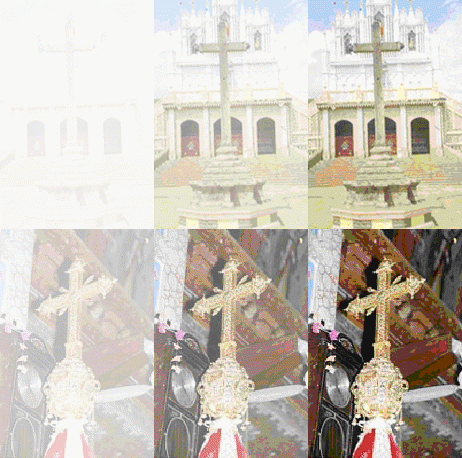
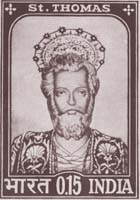
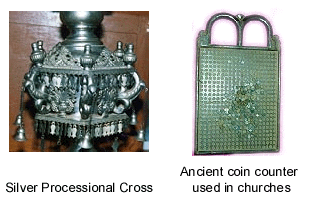














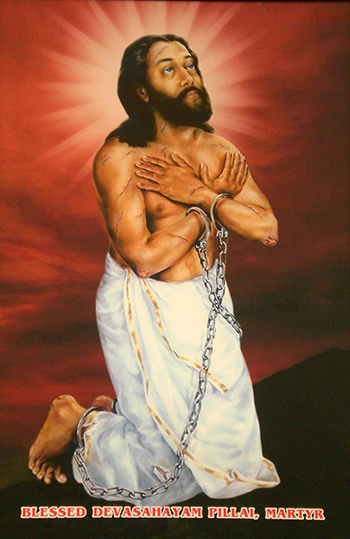
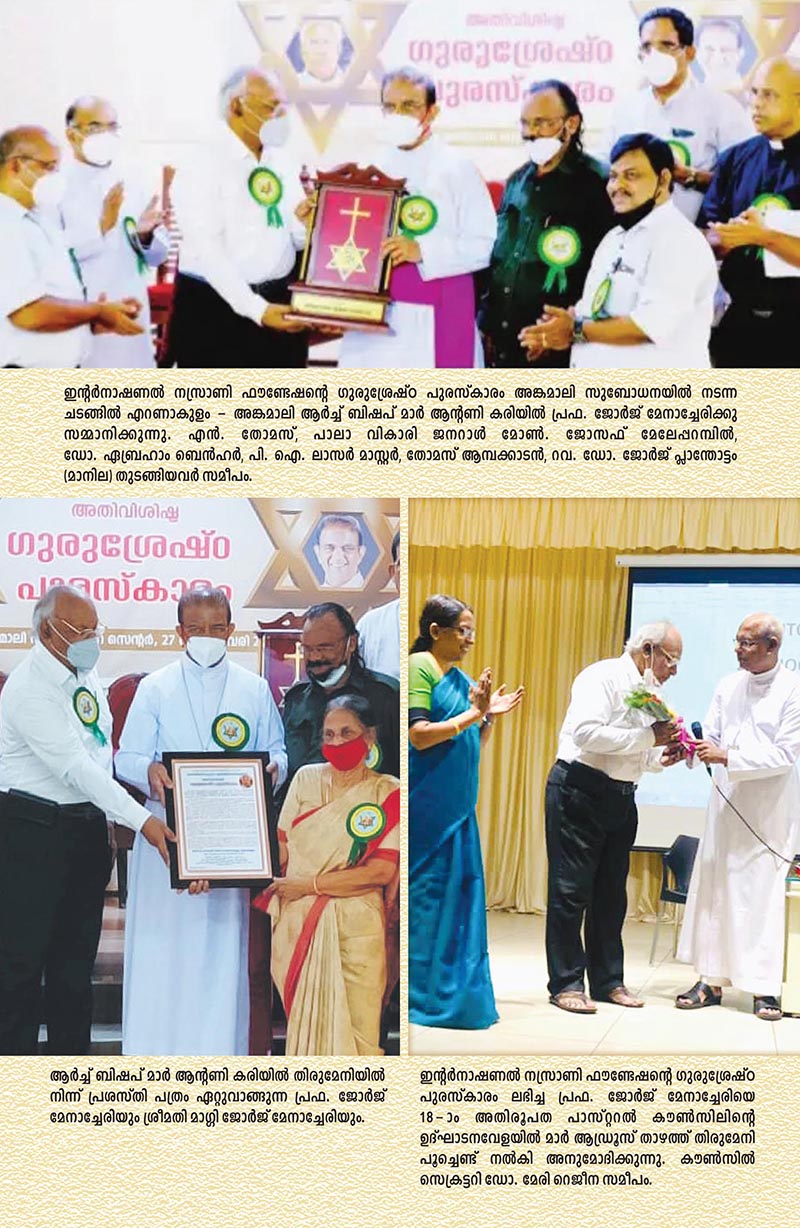
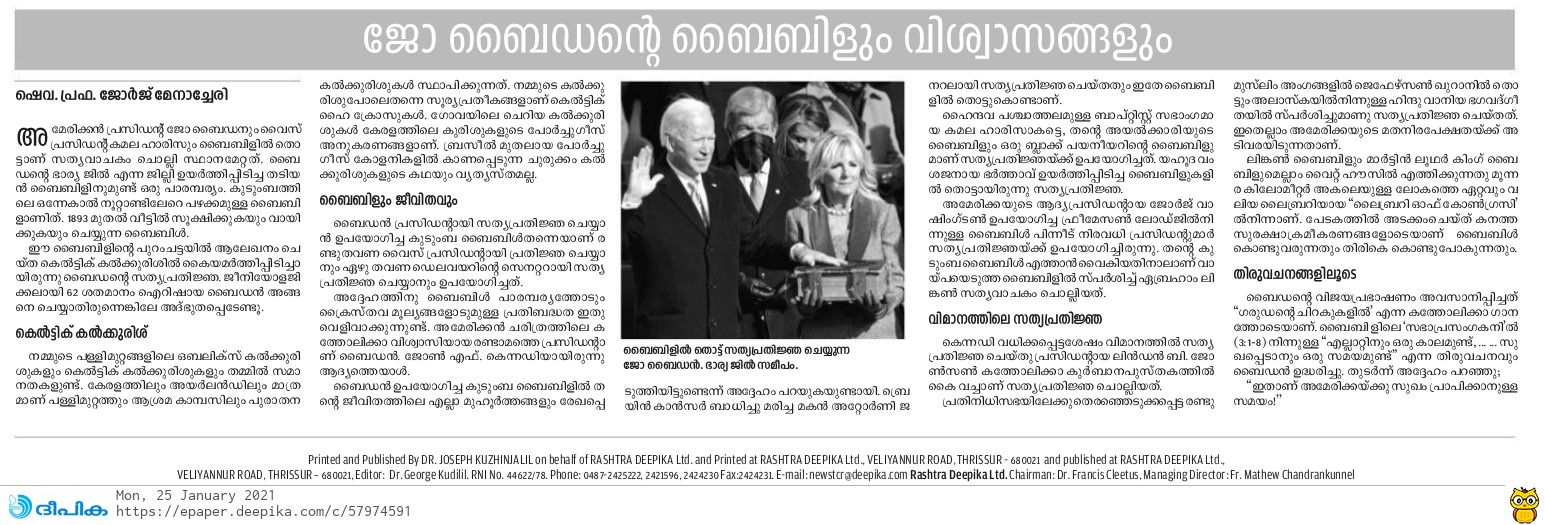
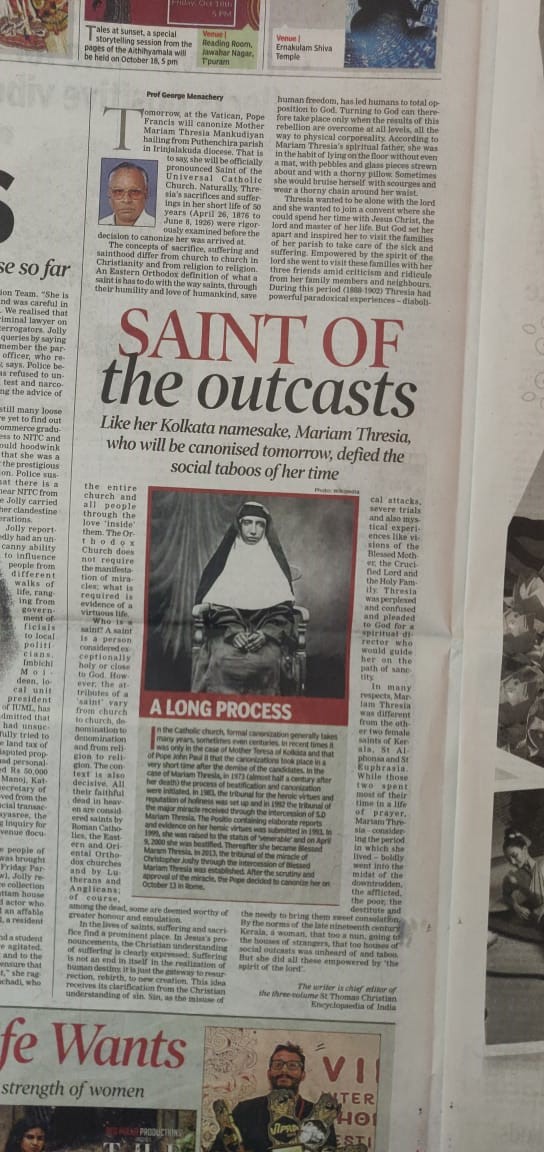
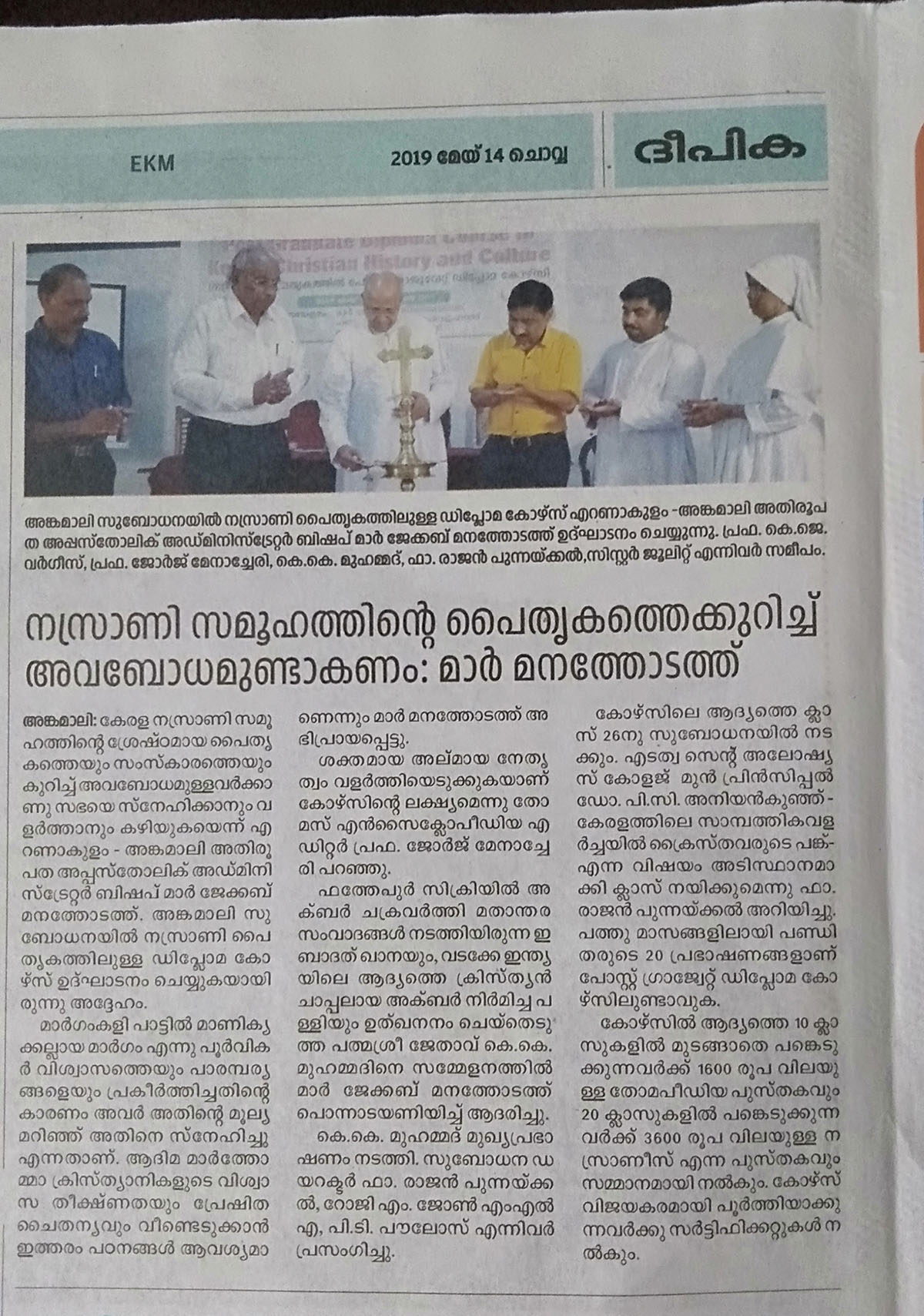
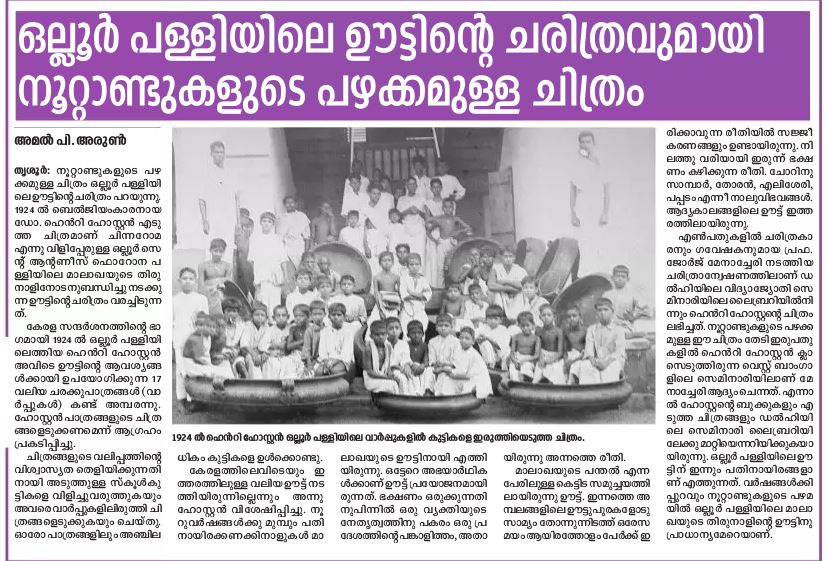
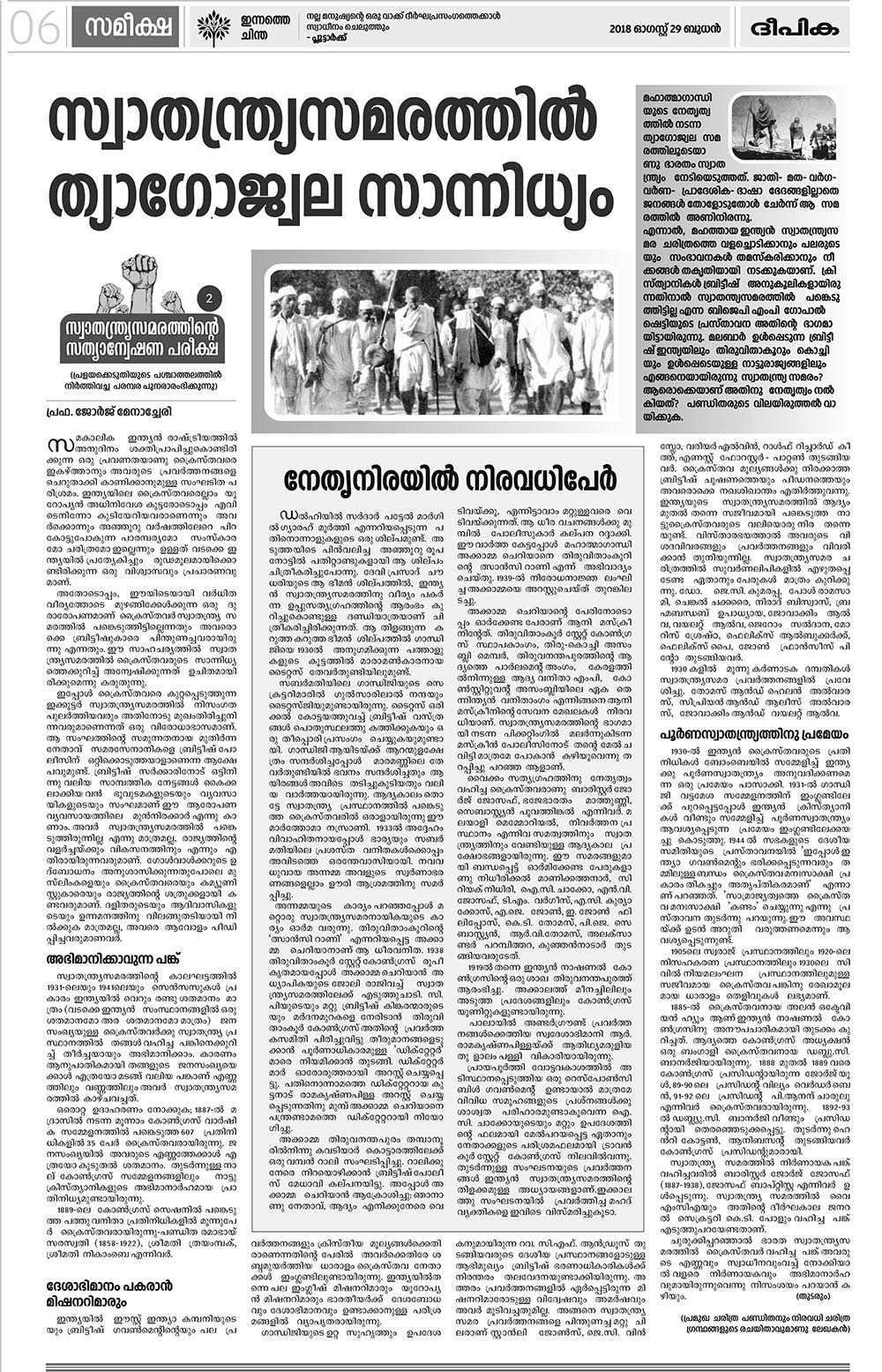
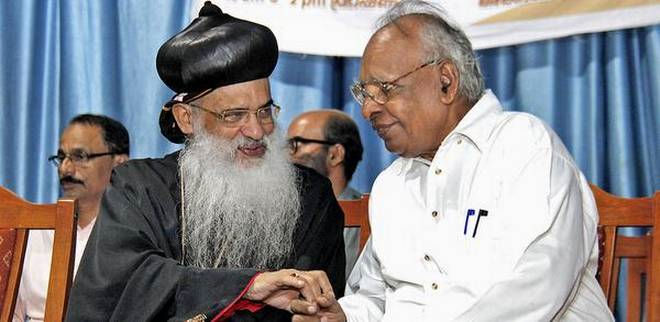
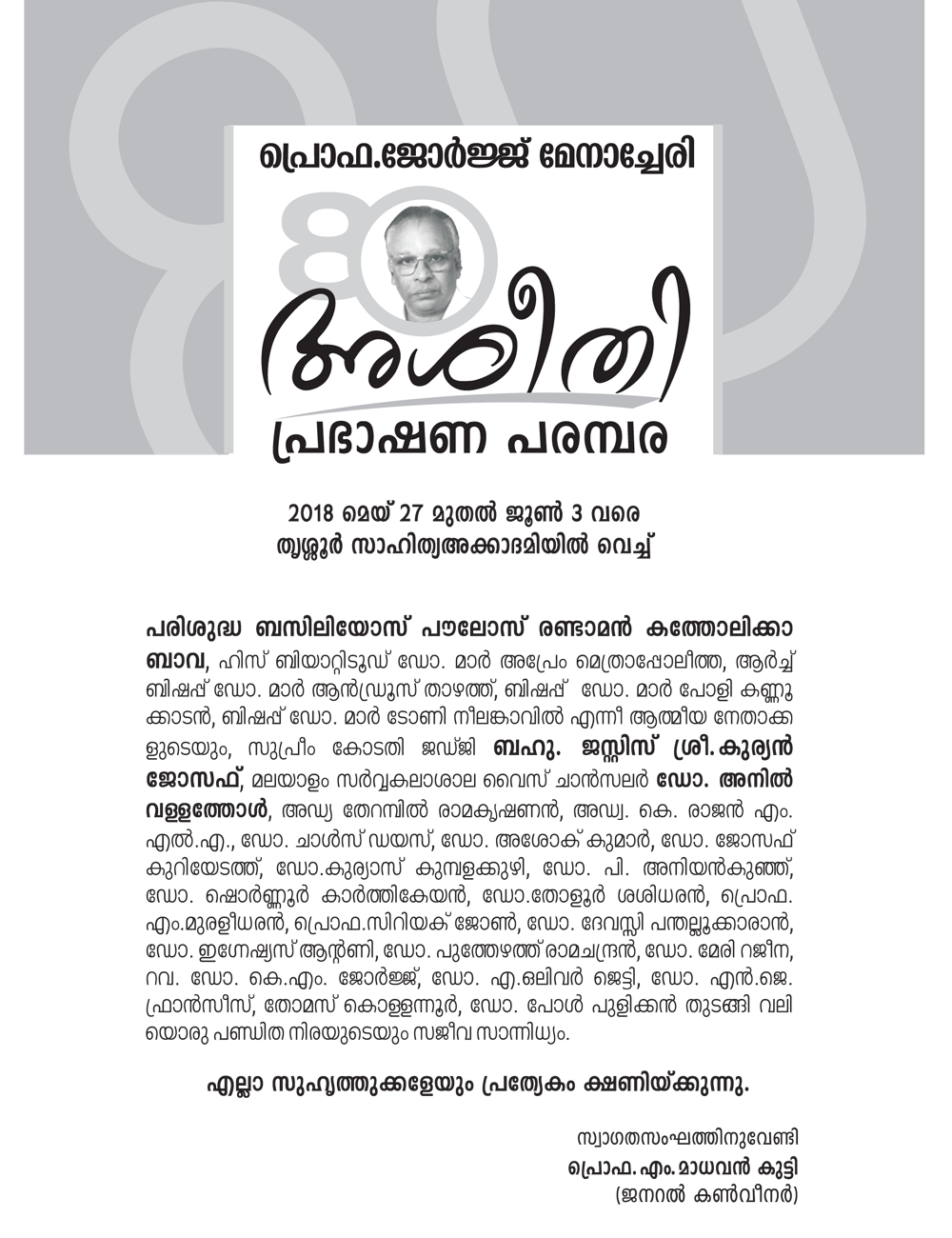
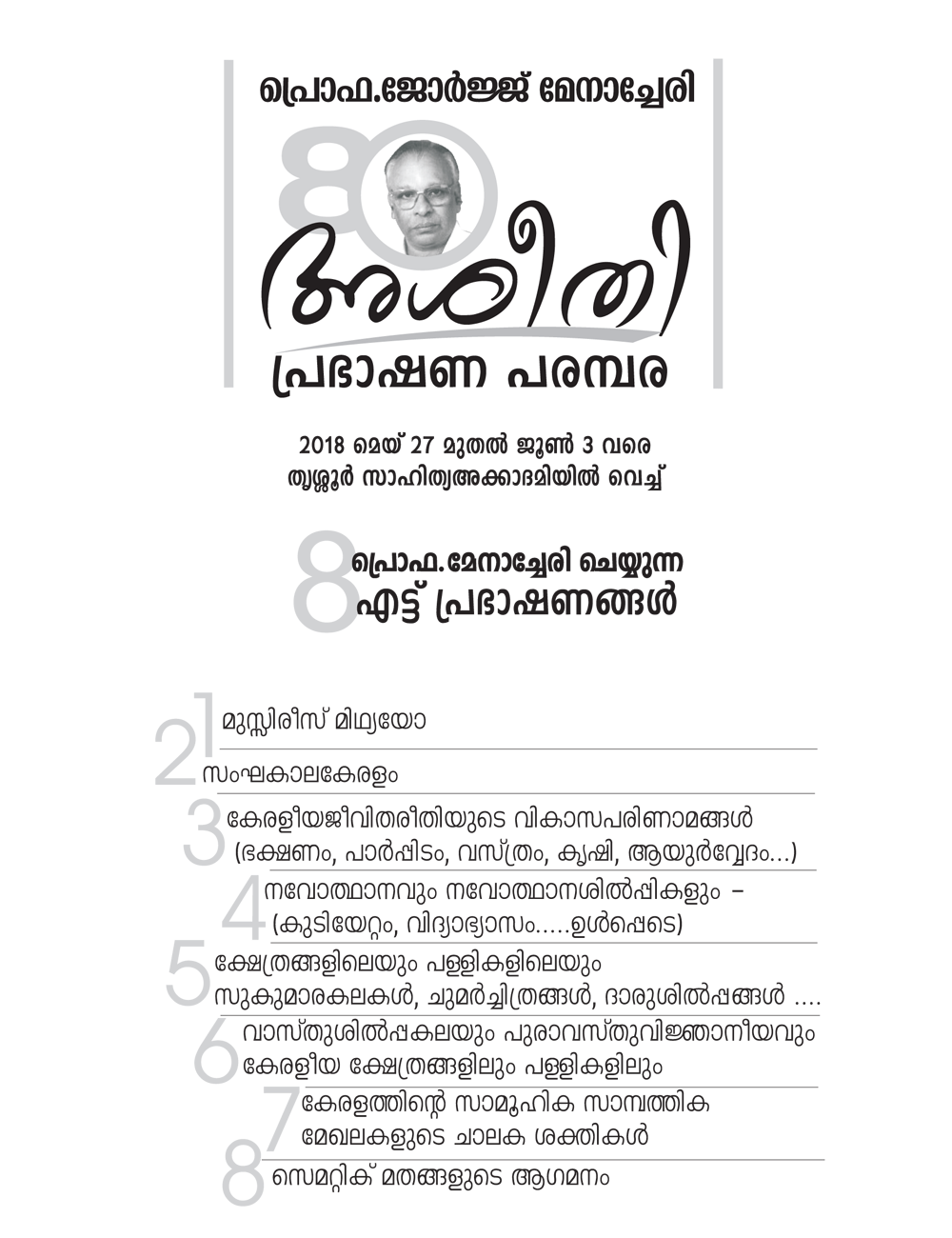
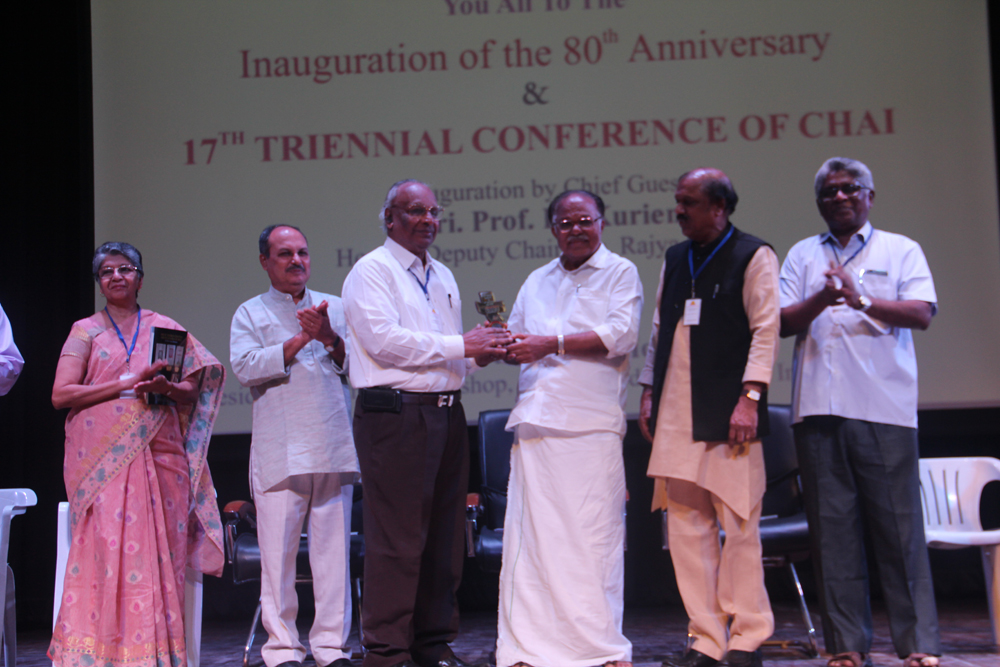
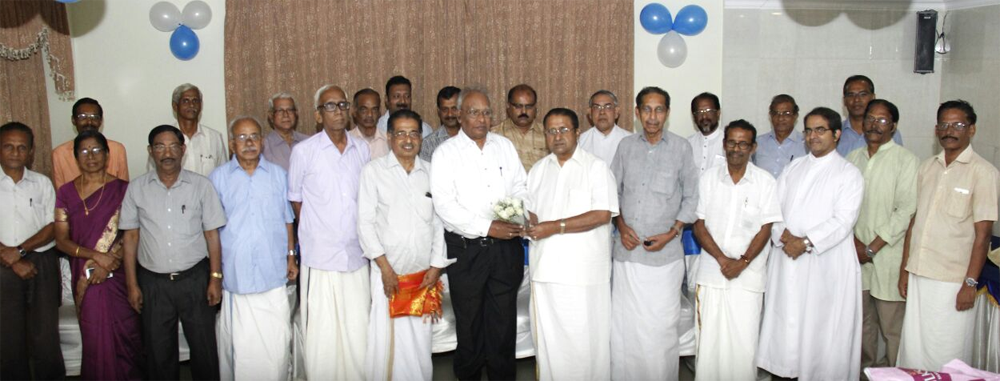
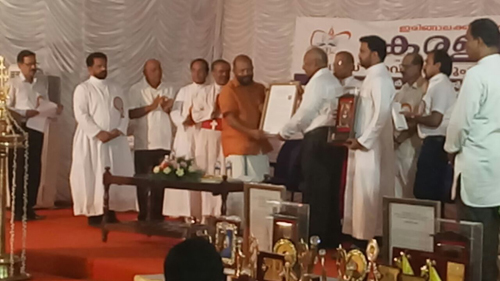
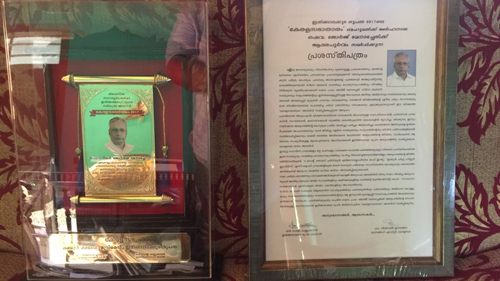
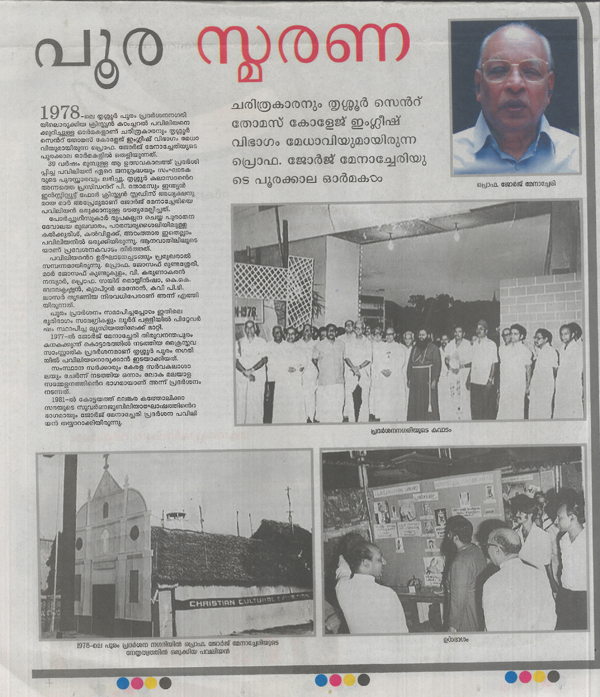


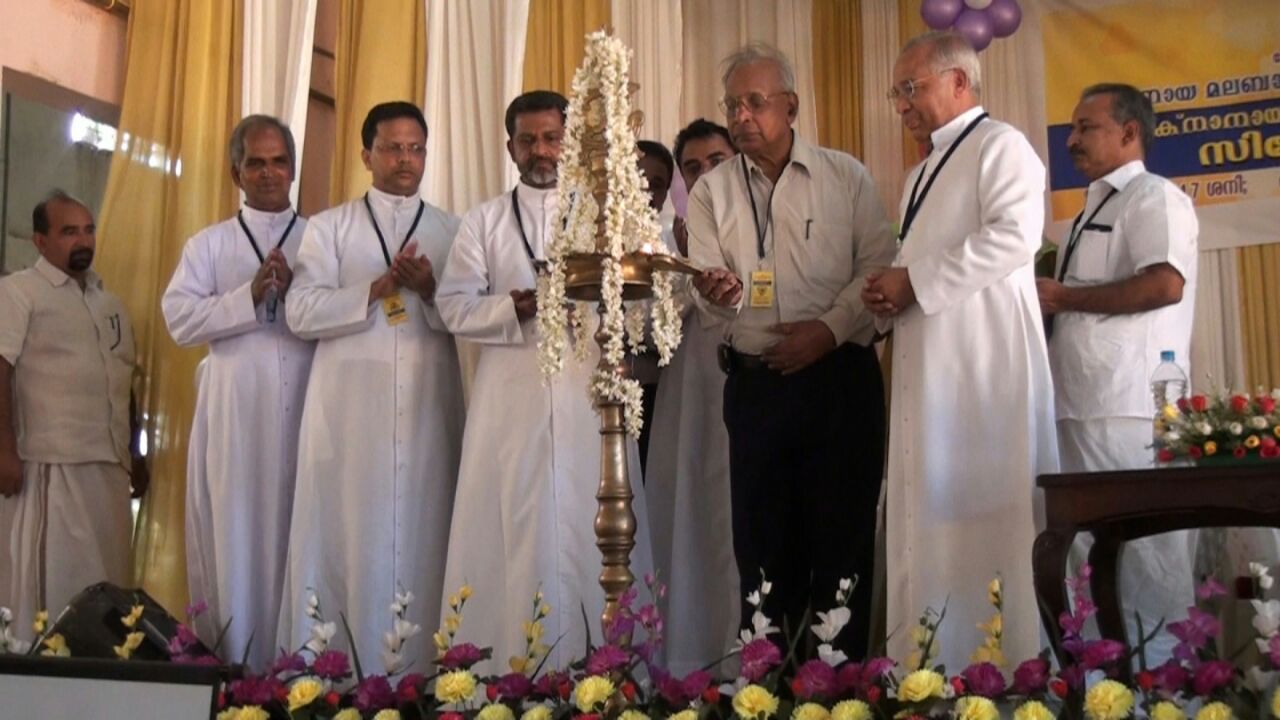
.jpg)
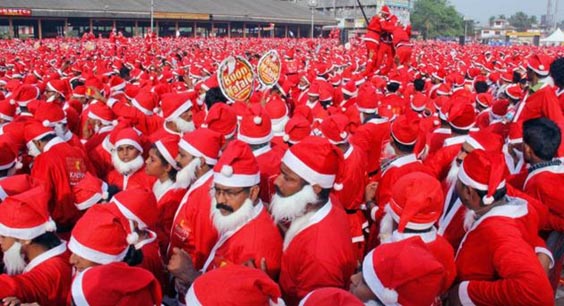
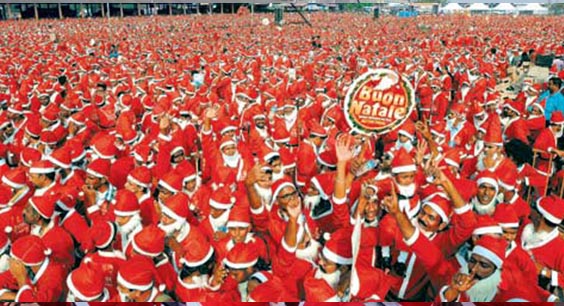
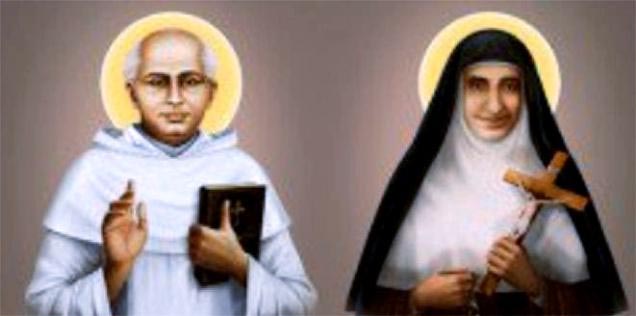 Pope
Francis on Sunday declared Fr.
Kuriakose Elias Chavara and Sister
Euphrasia Eluventhinkal from India
as Saints at Vatican.
Pope
Francis on Sunday declared Fr.
Kuriakose Elias Chavara and Sister
Euphrasia Eluventhinkal from India
as Saints at Vatican.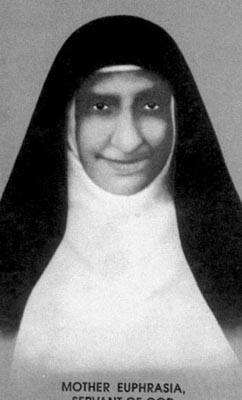 Sister Athanasia studied at St.
Mary’s Convent School, Ollur. “I
used to watch Sister Euphrasia
praying with a rosary in her hand in
the chapel. Whenever we faced some
problems either in school or at
home, we used to ask Sister
Euphrasia to pray for us. She was a
living saint,” says Sister Athanasia.
Sister Athanasia studied at St.
Mary’s Convent School, Ollur. “I
used to watch Sister Euphrasia
praying with a rosary in her hand in
the chapel. Whenever we faced some
problems either in school or at
home, we used to ask Sister
Euphrasia to pray for us. She was a
living saint,” says Sister Athanasia.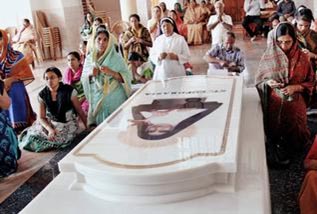
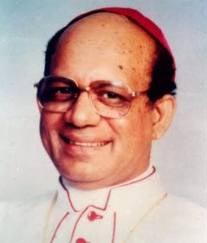
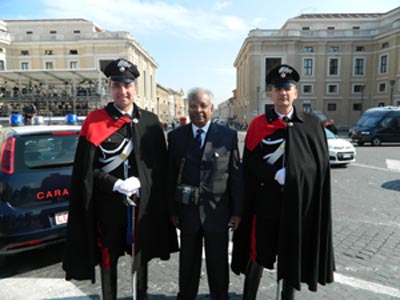
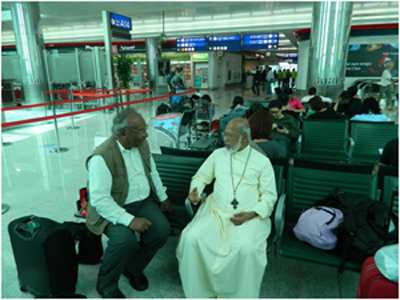
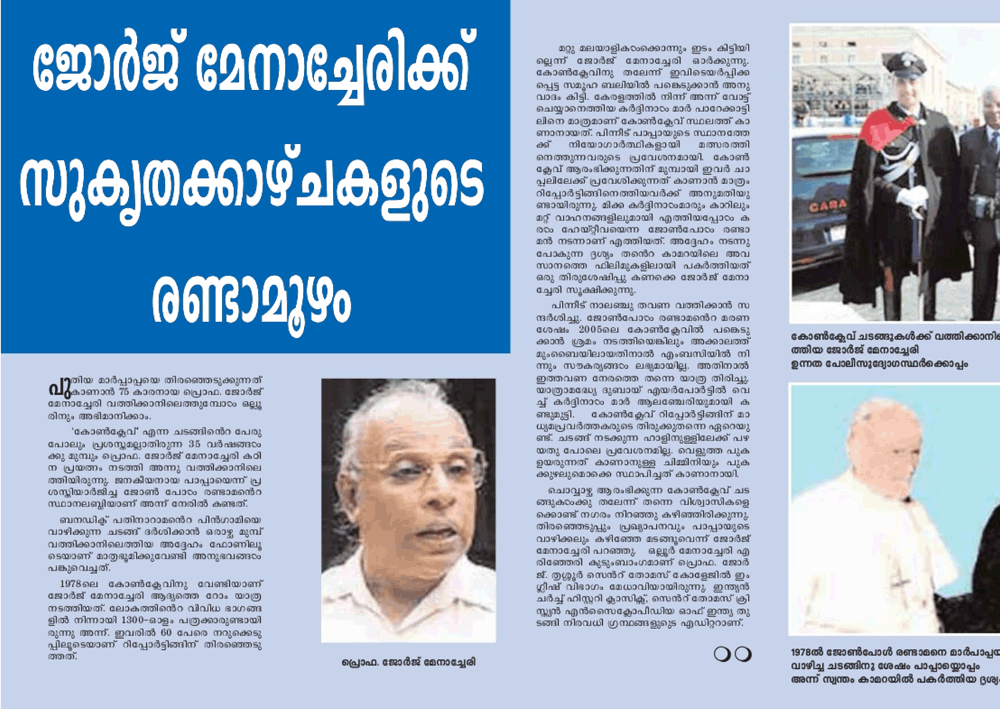
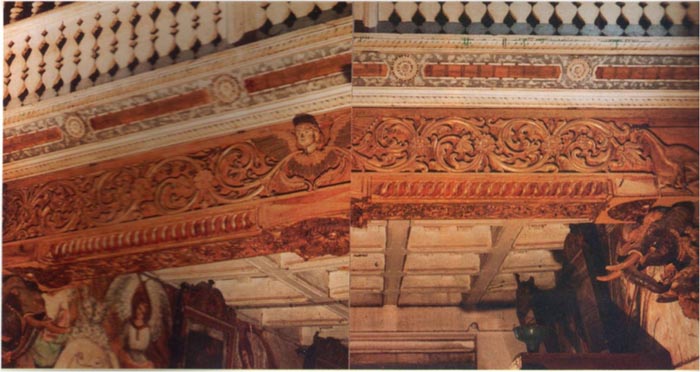
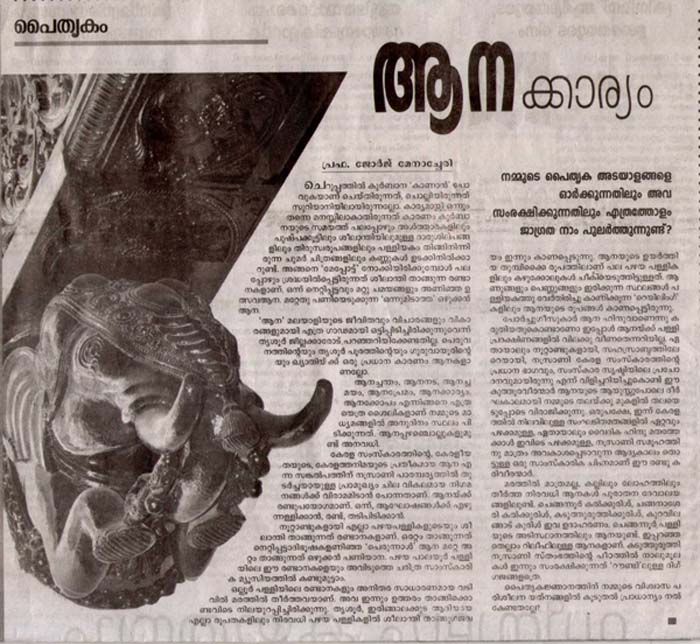
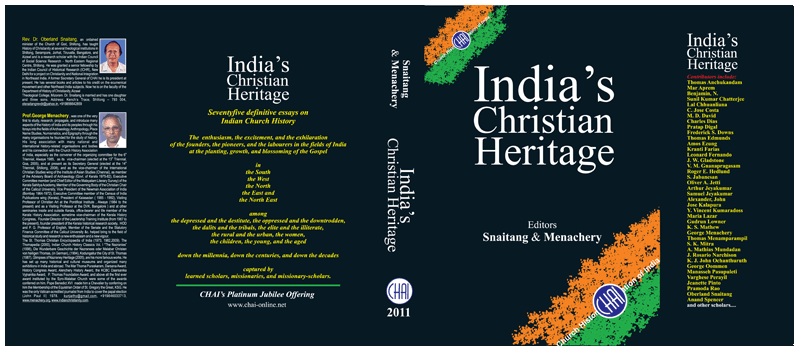
 While saying
that the continent has a
rich culture, the cardinal
identified three major areas
of work that focus on three
major challenges in the
area. Cardinal Gracias said
that "we need to have
dialogue with cultures, a
dialogue with the poor and a
dialogue with religions: to
study what the Gospel
mandate means to us in our
relationship with these
three major realities."
While saying
that the continent has a
rich culture, the cardinal
identified three major areas
of work that focus on three
major challenges in the
area. Cardinal Gracias said
that "we need to have
dialogue with cultures, a
dialogue with the poor and a
dialogue with religions: to
study what the Gospel
mandate means to us in our
relationship with these
three major realities."